.svg)

.svg)


Key takeaways
- Oracle stopped selling the RES 3700 and now only hands out fixes that already exist. The system still runs, and it can keep running for years.
- The bigger cost is connection. Modern ordering, delivery and guest tools are built for cloud POS systems, and almost none of them plug into an old Micros terminal.
- Oracle's replacement is Simphony, from $55 per terminal per month. For one or two sites, switching families often costs less.
- Add up the revenue channels your terminal locks you out of, then compare that number to the cost of moving. That math makes the decision for you.
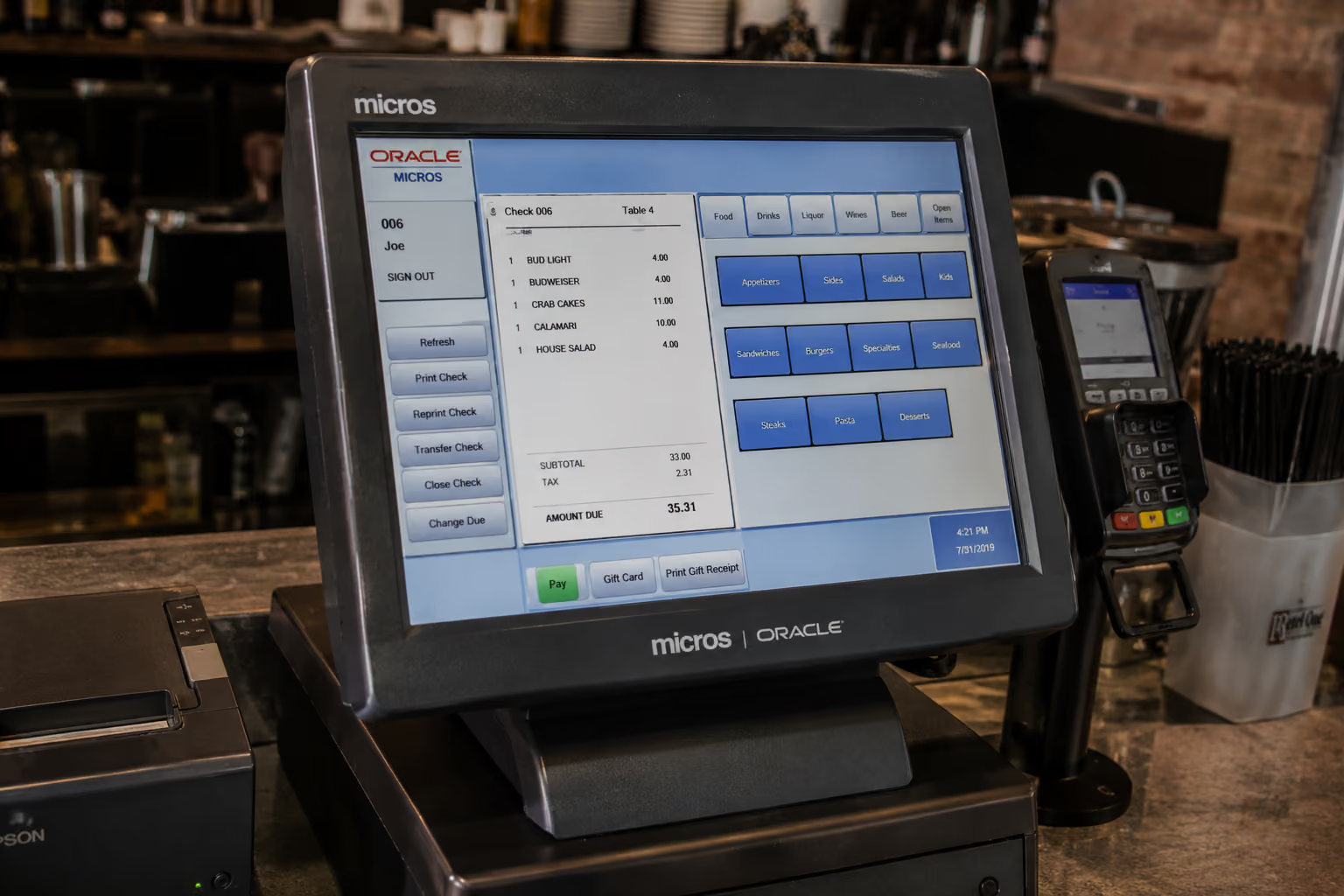
Walk into a restaurant that opened before 2010 and look at the counter. There is a good chance the same grey Micros terminal is still sitting there, outliving two owners and every phone the building ever had. Those machines refuse to die.
And that durability hides the real question. Your terminal is not about to break. The problem is what it can no longer join.
At Certus we work with hundreds of restaurants, from single-site takeaways to chains and franchises, across every major POS. I also grew up in this industry and managed 11 of my family's restaurants by age 17. I have stood next to a lot of old Micros workstations, and lately operators keep asking me the same question: do I need to replace mine?
Here is the honest answer, and it is probably a different argument than the one you have heard.
What happened to Micros
Micros was once the default till of hospitality. Oracle bought the company in 2014 for around $5.3 billion, back when Micros systems sat in hundreds of thousands of restaurants, hotels and venues worldwide.
The system most independent restaurants own is the RES 3700. Oracle no longer sells it. All of Oracle's restaurant effort now goes into Simphony, its cloud system. Your terminal still rings up orders every day, but the company that made it has moved its attention elsewhere.
The real cost is what won't connect
In the years since that Oracle deal, restaurant tech rebuilt itself around the cloud. Online ordering, delivery apps, loyalty programs, QR menus, waitlist tools, phone AI: every new way a guest can hand you money now ships as software that plugs into a cloud POS.
Test this yourself. Open the integrations page of any modern restaurant tool and you will find Toast, Square and Clover listed on every one. Now look for RES 3700. It is almost never there, and when it is, the connection runs through extra middleware with its own fee and its own ways to break on a Friday night.
That gap lands on you in one of two ways. Either you skip the channel, and those orders go to the restaurant down the road that didn't skip it. Or you run the channel on a side tablet, and someone on your team re-types every ticket into the till during the rush. I have watched staff do the tablet-to-till dance mid-service, and it is exactly as error-prone as it sounds.
A terminal that cannot join those channels charges you anyway. It just bills you in missed orders and double-typed tickets, which is why it feels free.
The support story, told straight
Oracle supports products in tiers, and the full tier, called Premier support, has ended for the RES 3700. What remains is sustaining support: Oracle still answers the phone and hands out fixes that already exist, but nothing new gets built. No new patches, no new security certifications.
Does that mean your system fails tomorrow? No. Plenty of RES terminals will still be ringing up orders in five years. You can even stay compliant with card-security rules (PCI, the standard every card-taking business follows), though each passing year means more workarounds and more explaining at audit time.
Two dates are harder to argue with. Microsoft ended Windows 10 support on October 14, 2025, and many older Micros setups ride on Windows. And while that is a date, the parts problem is a curve: firms that service legacy Micros describe the spare-parts pool as refurbished stock that shrinks every year. When a board fries mid-service, you are hunting for a used part.
Staying in the family: what Simphony really costs
Oracle's answer is Simphony. The Essentials plan starts at $55 per month per terminal, and the Plus plan for bigger operations starts at $75. There are switch promotions around too, including hardware for $1 when you move over.
Treat the sticker as a starting point. Installation, training, support plans and payment processing all land on top of the software fee, which is true of most POS quotes and worth pinning down in writing before you sign anything.
The bigger question is fit. Simphony is a serious system that runs chains and hotel groups, and it shows. The menu tools and reporting go deep, and a two-person office can drown in settings built for an enterprise IT team. If you run one or two sites, you are buying a system designed for someone much bigger than you. Some operators want that headroom. Plenty do not.
Leaving the family: what the modern systems offer
The other route is out, and it is the one most small operators I talk to end up taking. The switch that used to be a six-week nightmare is now usually measured in days, and every system below lives natively in the integration world this article is about.
I have written full operator reviews of the main options, with real fees in each one:
- Toast is built for restaurants first. Software starts at $0 per month, though the bill climbs as add-ons stack up.
- Square has a genuinely free starter plan and suits counter service best.
- Clover is solid hardware with one big warning: who you buy it from matters more than the system itself.
- SkyTab runs $29.99 a month with hardware included, in exchange for a processing commitment.
- Aloha is the other legacy giant, working through the same modernization story as Micros.
If you want them side by side, my full POS comparison covers the whole shelf.
The verdict
If you run a multi-site group with complex menus and a team that already knows Micros, Simphony is the natural move. Budget past the sticker and you will get a powerful system.
If you run one or two independent sites on an old RES 3700, switching families is usually the better deal. Pick from the reviews above based on how you serve.
And if your plan is to keep the old terminal, run one honest exercise first. List the channels you are currently skipping or running on side tablets: online ordering, delivery, loyalty, the phone. Put a monthly number on each one. If the total is near zero, keep the terminal with my blessing, it clearly still fits how you operate. In my experience that total is rarely near zero, and it grows every year the ecosystem moves further away from your counter.
Where the phone fits into this
You did not open an article about Micros to think about your phone line, so I will keep this short: the phone is one of the channels I just described.
Calls are still how catering bookings, big family orders and older regulars arrive, and a busy counter misses plenty of them. On a modern setup, an AI agent can answer every call, take the order in English or Spanish, both included, and drop it into the POS like a staff member typed it. That is what we built Certus AI to do, and it works with all major POS systems including Toast, Square, Clover, Skytab, and Aloha NCR. If your counter hears Spanish every day, my piece on why Spanish-speaking callers hang up covers that side of the phone.
Frank, who runs Baci Trattoria on SkyTab, recovered $50,000 in missed-call revenue across more than 1,000 orders this way.
If the phone channel is part of your rethink, see it working in a free demo. If it is not, the reviews above will still get your POS decision right.
About the author
I'm Gurveer Singh, CEO and co-founder of Certus AI. We work with hundreds of restaurants across every major POS, from single-location independents to chains and franchises. Before this, I managed 11 of my family's restaurants by age 17, from takeaways to breweries, which is where I learned that the till you can see costs you less than the channels you cannot switch on.
References
- Oracle community: Micros RES 3700 End Of Life Date
- Oracle community: RES 3700 end of support
- Oracle: MICROS product page
- Wikipedia: Micros Systems (Oracle acquisition, 2014)
- POSUSA: Oracle Simphony POS review and pricing
- Microsoft: Windows 10 end of support, October 14, 2025
- DCRS: Legacy MICROS support: repair vs upgrade

.svg)
.svg)
.svg)
.svg)