.svg)

.svg)


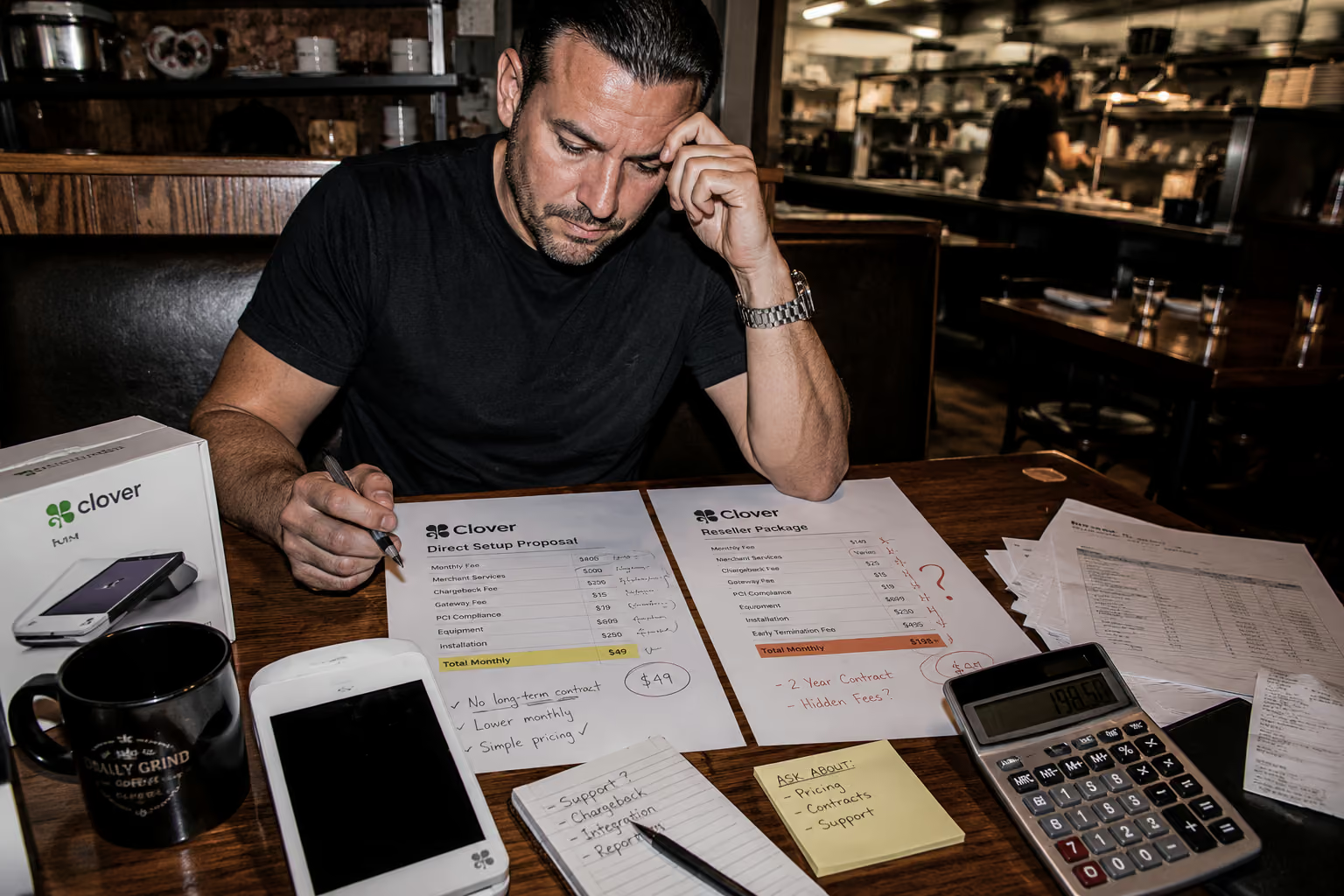
When operators in my network ask me about Clover, my first question back is always the same: who's selling it to you? Because Clover bought directly is a fair, flexible restaurant POS. Clover bought through the wrong bank or reseller is one of the most expensive mistakes an independent can make, and the contract looks identical until the statements start arriving.
I managed 11 of my family's restaurants growing up, and I've watched operators sign hardware leases that cost four times the price of the device. So this review covers both Clovers: what the system actually does well, what it really costs when you buy it right, and how to avoid buying it wrong. And, as always, the one revenue channel no POS covers.
One disclosure up front: Certus integrates with Clover, and restaurants we serve run on it every day. This is the review I'd give a friend.
What Clover POS is
Clover is Fiserv's small-business POS: touchscreen stations, handhelds, kitchen displays, and an app market, sold for restaurants in dedicated full-service and quick-service plans. It's a general small-business platform adapted for restaurants rather than a restaurant-only build, and that shows up in both its flexibility and its gaps.
Don't mistake adapted for small. Baird analysis reported by Payments Dive puts Clover at roughly 175,000 restaurant locations and a 20% share among independent and small-chain restaurants, actually ahead of Toast's 17% in that segment. If you've eaten at an independent restaurant this month, there's a decent chance a Clover printed the ticket.
Clover POS pricing, what you'll actually pay
These are Clover's direct prices for restaurant plans. Hold that word, direct - it's the entire plot of the next section.
| Plan (full-service restaurant) | Software cost | Notes |
|---|---|---|
| Starter | $89.95/month | Core restaurant POS |
| Standard | $109.90/month | Adds online ordering capability |
| Advanced | $129.85/month | Full stack incl. KDS support |
Quick-service plans run $89.95 to $109.90. Processing when you buy direct is 2.3% plus 10 cents in-person and 3.5% plus 10 cents keyed-in, and unlike Toast, the software itself is month-to-month when bought direct.
Hardware is where the number grows: the Station Duo runs $1,899, the Flex handheld $749, the Mini $849, and a kitchen display $799 to $899 plus $25 a month. Promotional hardware pricing usually ties you to a 36 or 48-month commitment with termination fees, so the "month-to-month" flexibility is real only if you buy your hardware outright.
The app stack matters too. Clover's core tiers are lean, and much of what a restaurant actually needs, loyalty, advanced inventory, scheduling, some online ordering setups, comes from the App Market at roughly $10 to $99 or more per app per month. Price your real stack, not the tier.
The reseller trap: buy Clover direct, or don't buy it
Here's the thing that makes Clover reviews so contradictory. Fiserv sells Clover directly, but so do banks and independent sales organizations, and they set their own processing rates, lease terms, and contracts on the same hardware.
Merchant Maverick's Clover analysis goes as far as naming specific major banks as vendors to avoid buying Clover through. The documented worst cases include effective processing rates of 5 to 6 percent, four-year leases totaling $7,200 on hardware that sells for $1,899, and termination fees from $500 to over $2,000.
The ratings tell the same story in one line: Clover holds around 3.9 on G2 and Capterra, where reviews skew toward the product, but 2.3 out of 5 on Trustpilot, where reviews skew toward billing and contracts. Same system. Different seller.
If you take one thing from this review: get a written quote from Clover directly, and if a bank or processor offers you Clover, compare every line - rate, lease vs purchase, term, exit fee - against that direct quote before signing anything.
What operators like about Clover
Bought right, there's a lot to like. The hardware is genuinely good and flexible - the Flex handheld in particular has become a fixture at counter-service spots and food trucks. The interface is simple enough that staff learn it fast, and the App Market means you add capability only as you need it instead of paying for an enterprise stack on day one.
Month-to-month software with no long lock-in (bought direct, hardware owned) is a real advantage over restaurant-first systems that want two or three years of commitment. For a straightforward operation that wants solid basics without a big contract, that flexibility is the pitch.
Where operators get frustrated
Beyond the reseller issue, the recurring complaints are depth and support. Clover's restaurant features are shallower than restaurant-first systems: coursing, complex modifiers, and reporting depth are the usual gaps operators name after switching from or comparing against Toast. Several of those gaps get filled through App Market apps, which means more monthly line items.
Support frustration tracks with the channel problem - when something breaks, direct customers and reseller customers can get very different experiences, and the Trustpilot score reflects the unlucky half.
Clover's 2026 moves
Fiserv has been investing in exactly the restaurant depth Clover gets criticized for. Clover Hospitality by BentoBox brought a restaurant-grade layer in 2025, Clover Reserve added table management and reservations in May 2026, and new hardware keeps shipping. The gap to restaurant-first systems is narrowing, though most of the new capability lives in add-ons rather than the base tiers.
The gap Clover leaves: your phone line
Whatever tier you pick, Clover doesn't answer your phone. DoorDash's research, reported by Restaurant Dive, found 50% of calls to restaurants go unanswered, and those calls concentrate in the exact windows when nobody can step away from the counter.
That's the job we built Certus for. It answers every call, takes the complete order in English or Spanish, both included as standard, and sends the ticket straight into Clover, so nothing gets re-typed. Jimmy's Seaside Burgers and Wings runs exactly this setup - owner Rico Gray's hardest problem was never the food, it was people to answer everything, and Clover plus Certus closed the phone side of it.
Certus works with all major POS systems including Toast, Square, Clover, Skytab, and Aloha NCR, on flat monthly pricing with a 30-day rolling contract, same-day setup, and a 30-day money-back guarantee. You can see the full Clover setup on our Clover integration page.
Verdict: who should choose Clover
Clover fits you if you want good hardware and simple software without a multi-year software contract, you're comfortable assembling your stack from apps, and - this is the condition - you buy it direct or scrutinize a reseller deal line by line. At 175,000 restaurant locations, it's a mainstream choice for independents, not a compromise.
Think harder if you need deep restaurant-specific workflows out of the box, in which case compare Toast, or if the total of plan plus apps plus hardware lease starts approaching restaurant-first pricing anyway. I've broken down Clover vs Square and Clover vs Toast separately if you're down to a shortlist. My full reviews of Square and Skytab are up too if you're still shortlisting.
Frequently asked questions about Clover POS
Is Clover a good POS for restaurants?
Bought direct, yes, for straightforward operations: good hardware, month-to-month software, and plans from $89.95. Its restaurant features are shallower than restaurant-first systems, so complex full-service operations should compare carefully.
How much does Clover POS cost for a restaurant?
Direct restaurant plans run $89.95 to $129.85 a month in software, with processing at 2.3% plus 10 cents in-person. Hardware runs $749 to $1,899 per device, and App Market add-ons typically add $10 to $99 or more per app per month.
Should I buy Clover from my bank?
Compare any bank or reseller offer against a direct written quote from Clover first. Resellers set their own rates and terms on the same hardware, and the documented bad outcomes - multi-year leases costing several times the hardware price, effective rates of 5 to 6 percent - come almost entirely from that channel.
What are Clover's biggest complaints?
Reseller contract terms top the list, followed by restaurant-feature depth and support inconsistency. The rating gap between product-focused review sites (around 3.9) and billing-focused ones (2.3 on Trustpilot) maps almost perfectly onto the direct-vs-reseller split.
Does Clover answer restaurant phone calls?
No. Clover has no native AI phone answering, and its 2026 AI investments focus on in-store and reservation tools. Phone answering connects through the App Market and API, which is how an AI phone agent like Certus takes calls and sends orders into Clover automatically.
Want the phone side of your Clover setup capturing every order? Book a demo and we'll show you Certus running on Clover, live.
References
Sources referenced in this article:
- NerdWallet, "Clover POS Review" (updated May 20, 2026) - nerdwallet.com
- KoronaPOS, Clover pricing analysis (July 1, 2026) - koronapos.com
- Merchant Maverick, Clover pricing and reseller analysis (November 2025) - merchantmaverick.com
- Trustpilot, Clover reviews (2.3/5, ~2,065 reviews) - trustpilot.com
- Capterra, Clover reviews - capterra.com
- Payments Dive, "Toast, Clover battle for restaurant customers" (April 29, 2025) - paymentsdive.com
- Payments Dive, Baird restaurant POS analysis (January 8, 2026) - paymentsdive.com
- Business Wire, "Clover Hospitality by BentoBox" (May 2025) - businesswire.com; Clover Reserve launch (May 12, 2026) - stocktitan.net
- Restaurant Dive, "DoorDash adds automated phone ordering for restaurants" (August 28, 2023) - restaurantdive.com

.svg)
.svg)
.svg)
.svg)