.svg)

.svg)


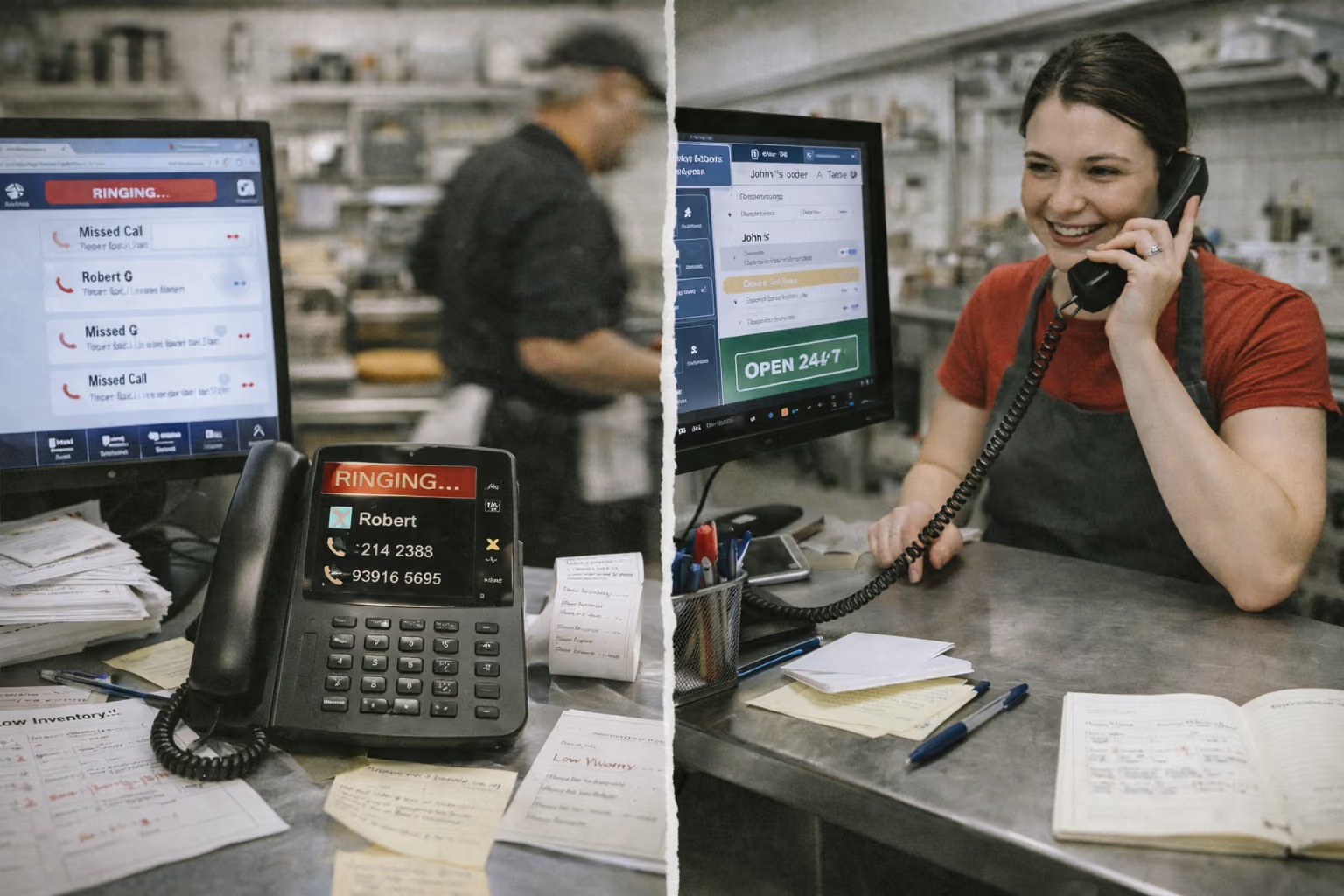
Long wait times are one of the biggest frustrations for restaurant customers. According to WifiTalents research, 52% say it’s their top complaint, and that includes waiting on the phone, not just for a table.
Think of a typical Friday dinner rush. Your phone rings while three other lines light up at the same time. The host is seating a large party. Servers are busy running food. The kitchen is already overwhelmed.
No one picks up. Four potential customers hear the phone ring, then voicemail. A few seconds later, they’re calling the restaurant down the street instead.
Why phone wait times kill restaurant revenue
58% of diners say wait times significantly impact their overall satisfaction, according to customer experience data. Phone wait times hit even harder because customers can't see that you're busy. They just know nobody answered.
Here's what happens when calls go unanswered. A customer wants to place a $40 takeout order. They call once. Busy signal or voicemail. They don't leave a message. They open DoorDash and order from a restaurant that makes ordering easy.
You just lost $40. Multiply that by 20-30 missed calls weekly during peak hours. That's $40,000-$60,000 in annual revenue walking away because your phone system can't keep up.
The problem compounds during your busiest, most profitable hours. Friday dinner. Saturday lunch. Super Bowl Sunday. When you're making the most money from dine-in customers, you might be losing the most from missed phone orders.
Traditional phone coverage doesn't scale
Most restaurants handle phone calls in one of three ways. None works well.
Option 1: Staff answer between tasks
Your host answers while setting tables. Servers grab calls while taking orders. Kitchen staff pick up between plating dishes.
This creates chaos. Service slows down. In-person customers wait longer. Phone customers get rushed service. Order accuracy drops because the staff is distracted.
Option 2: Hire dedicated phone staff
Dedicated phone coverage costs $35,000-$45,000 annually per person. That covers 40 hours weekly. For 24/7 coverage, triple that cost.
Even with dedicated staff, you're limited to one call at a time. When multiple people call simultaneously during rushes, some still hit busy signals.
Option 3: Let calls go to voicemail
This is admitting defeat. Customers don't leave voicemails for takeout orders. They call competitors.
Research shows 82% of consumers avoid businesses where they anticipate lines or delays. Phone calls create the same psychology. If they expect to wait or reach voicemail, they don't bother calling.
How 24/7 call handling with voice-AI solves the problem
AI phone answering operates continuously without breaks, sick days, or capacity limits. The system picks up every call on the first ring. Multiple customers can call simultaneously, and each gets answered instantly.
When someone calls at 2 AM to place tomorrow's catering order, the AI takes it. When Saturday dinner rush generates 15 simultaneous calls, all 15 get answered. When staff are overwhelmed on Super Bowl Sunday, the phone coverage doesn't skip a beat.
The impact shows immediately. Missed call rates drop from 30-40% to near zero. Revenue from phone orders jumps 26% according to FSR Magazine data. Customer satisfaction improves because nobody waits on hold.
Watch how this works in real restaurant operations: How AI Answers Restaurant Phone Calls
This video demonstrates the actual customer experience when calling a restaurant using 24/7 AI call handling. Notice how quickly calls get answered and orders get processed.
Conversational AI for restaurant phone orders explains the technology powering these instant responses and natural conversations.
What happens during restaurant peak hours
Traditional phone systems break down during rushes. One person can only handle one call. Everyone else hits busy signals or waits on hold.
42% of diners say table wait times over 30 minutes deter them from visiting, according to TouchBistro research. Phone wait times create the same friction for takeout customers.
24/7 AI call handling means no call goes unanswered, even during the busiest hours. The Friday dinner rush that used to miss 40 calls now captures every single one. The system handles unlimited simultaneous conversations without performance degradation.
Your staff focuses on in-person customers. Voice AI in restaurants handles phone operations. Nobody gets interrupted. Service quality stays high for everyone.
After-hours revenue nobody captures
Most restaurants close at 11 PM. But customers planning tomorrow's lunch might call at 11 PM. Those orders go straight to voicemail with traditional systems.
24/7 call handling captures after-hours orders automatically. The AI takes the order, schedules it for the appropriate time, processes payment, and sends it to your system.
This is pure incremental revenue. You weren't open. You weren't staffed. But you're still making money from customers who prefer calling to using apps or websites.
Restaurants using 24/7 systems report 20-30 additional monthly orders from after-hours calls. At a $30 average order value, that's $7,200-$10,800 in annual revenue that was going straight to voicemail before.
How restaurant call handling integrates with your operation
The technology connects directly to your existing POS system. When the AI takes an order, it sends a ticket to your kitchen display formatted exactly like staff-entered orders.
Your team sees no difference. A ticket appears. They make the food. Whether a server entered it at the register or an AI receptionist took it over the phone doesn't matter to kitchen operations.
Payment processing happens during the call. Customers provide card details securely. Transactions are processed through your existing payment gateway. No separate reconciliation required.
Testing and launching your restaurant AI assistant takes 24-72 hours for most operations. The system learns your menu, connects to your POS, and starts answering calls without disrupting service.
Staff freed from phone chaos
Your team stops managing phones during service. Hosts seat tables instead of running to answer calls. Servers focus on their tables instead of taking phone orders while balancing plates.
Kitchen staff isn't interrupted mid-prep to scribble down orders. Managers don't field complaint calls during the dinner rush.
An AI alternative to dedicated phone staff costs a fraction of hiring someone while delivering better coverage. No sick days. No turnover. No scheduling headaches.
The efficiency impact goes beyond saved labor hours. When staff aren't constantly interrupted, they work faster and make fewer mistakes. Service quality improves for in-person customers because team members can focus.
Handling complex orders accurately
Concerns about AI handling complicated restaurant orders are understandable. "Half pepperoni, half sausage, extra cheese on the pepperoni side only, well done" sounds like it would confuse automated systems.
Modern AI in restaurant operations handles these orders with 97% accuracy. The system understands modifications, dietary restrictions, special instructions, and corrections mid-order.
When customers change their minds halfway through, the AI adjusts naturally. "Actually, make both burgers with no onions instead of just one" gets processed correctly.
Understaffed kitchens benefit from AI voice assistants because orders arrive clearly formatted. No deciphering handwriting. No guessing what "extra chz" means. Every ticket is perfectly legible.
Automated upselling that happens consistently
Human staff vary in upselling. Some suggest adding on naturally. Others forget during rushes. Training helps, but doesn't create consistency across shifts and locations.
AI upsells on every single call without exception. "Want to add a 2-liter soda? It's only $3 more and feeds your whole group," happens on large orders. "That burger pairs great with our sweet potato fries" happens when someone orders a burger.
The suggestions adapt based on what converts. If dessert recommendations don't work during lunch, the system stops making them. If extra toppings convert at 60% on pizzas, it keeps suggesting them.
Restaurants using intelligent upselling report 15-20% average order value increases. That's revenue captured automatically without staff effort or training.
Restaurant Voice AI with multi-language capabilities to expand markets
Restaurant call automation includes automatic language detection. When a customer starts speaking Spanish, the AI switches languages seamlessly. English and Spanish are both included as standard.
This expands your addressable market without hiring multilingual staff. Customers who prefer ordering in their native language can do so. Accuracy improves because the AI understands food terms correctly across languages.
For restaurants in diverse markets or tourist areas, this capability directly drives revenue. Customers who previously struggled with language barriers can now order confidently. Using multilingual AI for restaurants to remove language barriers helps businesses serve more customers without adding complexity to their operations.
Implementation of voice AI without disruption
Deploying 24/7 call handling doesn't require shutting down operations or retraining your entire staff. The system connects to your existing phone line and POS.
Your phone number stays the same. Customers call the number they've always called. The only difference is that every call gets answered instantly instead of ringing until someone is free to pick up.
Staff training takes minutes. They need to know that phone orders will appear automatically in the POS. Most operations report that the transition feels invisible to the team.
Measuring the impact of 24/7 restaurant call handling
Track these metrics before and after implementing 24/7 call handling:
- Missed call rate: Percentage of incoming calls that don't get answered.
- Phone order revenue: Total sales from phone orders weekly and monthly.
- Average order value: How much customers spend per phone order.
- After-hours orders: Orders placed when you're closed or understaffed.
- Staff phone time: Hours weekly spent answering phones and taking orders.
Most restaurants see dramatic improvement within the first week. Missed calls drop from 30-40% to less than 5%. Phone order revenue jumps 20-30%. Average order values increase from consistent upselling.
Stop losing revenue to unanswered phones
Phone wait times don't just frustrate customers. They cost real money. Every missed call is a lost order. Every customer on hold is considering hanging up and calling somewhere else.
Traditional phone coverage can't scale. You're limited by how many staff you have and how many calls they can handle simultaneously. During your busiest, most profitable hours, you're losing the most revenue.
24/7 AI phone answering solves this completely. Every call gets answered instantly. Multiple conversations happen simultaneously. After-hours orders get captured. Staff focus on in-person service.
Certus AI delivers instant call answering across all hours. Orders are processed with 97% accuracy on complex modifications. The system integrates with all major POS platforms including Toast, Square, Clover, Skytab, and Flipdish. Onboarding takes 45 minutes, the setup can be live in a day, without disrupting operations.
Stop losing customers to phone wait times and missed calls.
Book a demo with Certus AI and see how 24/7 call handling captures revenue you're currently missing.

.svg)
.svg)
.svg)
.svg)