.svg)

.svg)


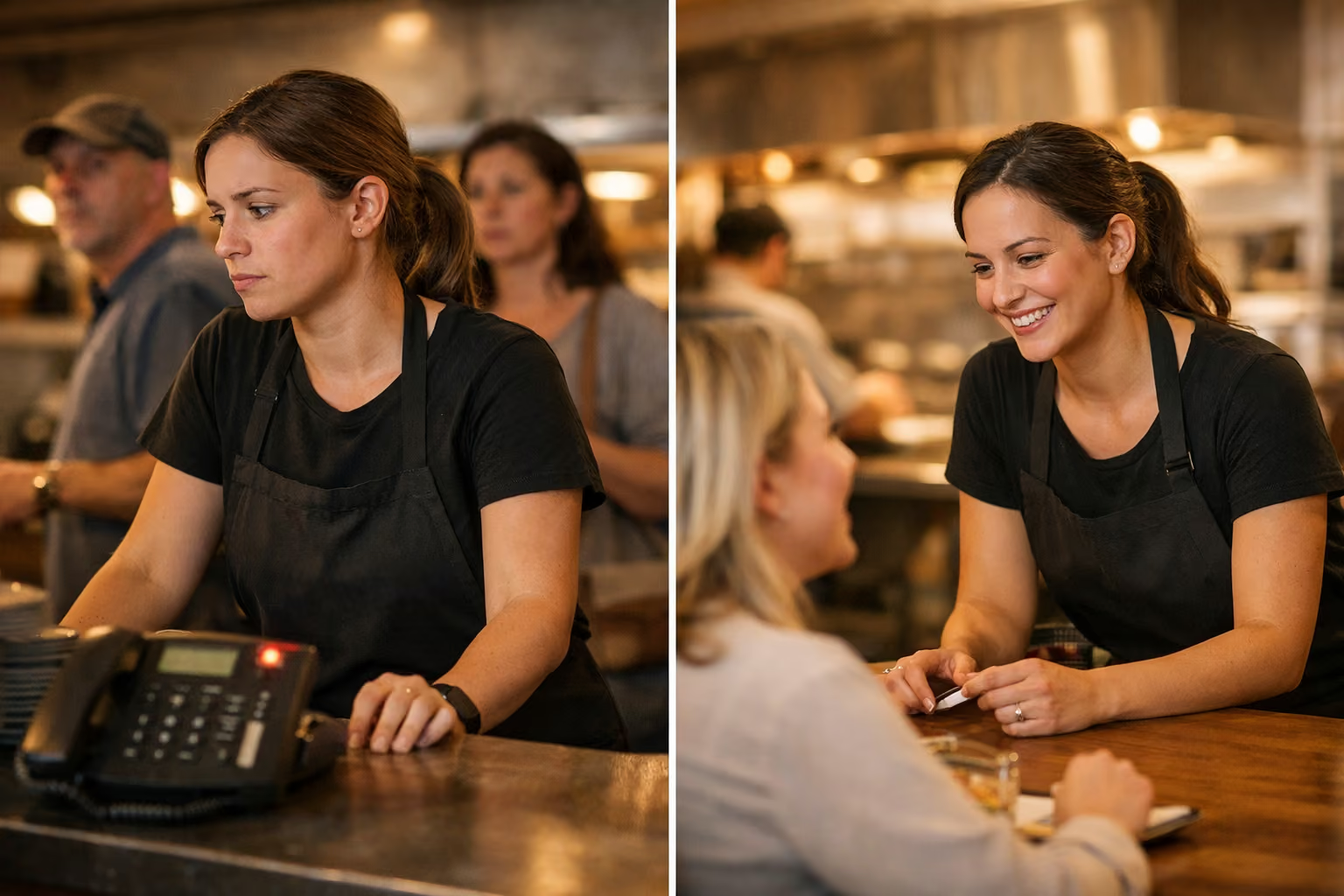
Fixing restaurant tech with an AI phone agent
Restaurants are spending more on technology than ever before, but customer satisfaction is dropping. Recent data from the National Restaurant Association shows that while 60% of operators are investing in new tech, nearly 40% of customers say it actually makes their experience worse.
We're solving our problems by creating new ones for our guests.
It's time for a new approach.
Why more tech isn't always better
The restaurant industry is facing a misalignment between operator investment and customer happiness. This gap is a clear warning that our current tech strategy is broken. While we adopt tools to fight labor shortages and speed up service, guests are feeling the friction. The result is a slow erosion of the hospitality that keeps them coming back.
Research from Technomic confirms this trend. In 2018, digital ordering satisfaction matched in-person dining. By 2025, it had fallen behind. We're investing more to get less. The contrast between Wingstop and First Watch tells the story. Wingstop went all-in on digital and saw sales dip. First Watch used tech to support its staff, not replace them, and saw sales grow.
One brand used tech to replace human interaction, while the other used it to enhance it. This distinction is the key to making restaurant tech investments that actually pay off in 2026.
Where restaurants go wrong with technology
Most restaurant tech is built to solve operator problems like labor costs, staffing shortages, and order accuracy. These are urgent challenges. But when we deploy solutions without seeing them through the customer's eyes, we often just transfer the burden from our side of the counter to theirs.
That QR code menu saves printing costs but forces a guest to squint at a tiny screen. The self-order kiosk reduces labor but creates a line of confused customers who just want to ask a simple question.
Technology designed for efficiency can easily backfire. QR code menus require guests to navigate unfamiliar interfaces, often with bad lighting and spotty Wi-Fi. Clunky online ordering systems make customers click through a dozen steps for a process that would take 90 seconds on the phone.
Outdated IVR phone systems are a classic example of this failed tradeoff. They were meant to reduce the load on staff but instead trap customers in frustrating loops of "Press 1 for hours, Press 2 for our location." The operator's problem of a constantly ringing phone is technically solved, but the customer's frustration multiplies.
What more "efficiency" may cost your restaurant
When tech replaces a human touchpoint without offering a clearly better alternative, customers notice. They may not complain, but they vote with their wallets. Nearly 40% of diners feel the restaurant experience has become less personal.
This hidden cost appears in a few ways:
- Reduced loyalty: Customers who feel like they're interacting with a machine are less likely to become regulars.
- Lower check averages: Without a person to suggest a side dish or a drink special, orders shrink.
- Negative reviews: A frustrated customer is far more likely to leave a bad review, tanking your online reputation.
Staff morale also suffers. When employees see technology as a replacement instead of a tool, they feel devalued. This creates a cycle where the remaining human interactions become transactional instead of hospitable.
The principle of invisible technology
The best restaurant technology is the kind your customers never see. They don't notice the system, the interface, or the automation. They only feel the positive result: faster service, perfect orders, and attentive staff. This is the framework that separates tech that truly enhances hospitality from tech that just gets in the way.
Think about your last great dining experience. You probably don't remember the POS system or the kitchen printer. You remember that your food arrived quickly and correctly, and the staff seemed happy to be there. That's invisible technology at its best.
Automate the annoying, empower the human
The principle is simple: use technology to handle the repetitive, frustrating tasks that customers and staff hate. This frees up your team to focus on what humans do best, which is providing genuine hospitality.
Customers don't want to:
- Wait on hold for ten minutes during the dinner rush.
- Navigate a confusing phone menu.
- Repeat their order because of background noise.
- Call back because the line was busy.
But they do want a person to:
- Give them a friendly greeting.
- Answer questions about the menu.
- Make a personal recommendation.
- Solve a problem with empathy.
The best restaurant technology handles the first list so your staff can excel at the second.
A real-world example: re-engineering the restaurant phone line
The restaurant phone line is a perfect candidate for invisible technology. It's a critical revenue channel that is also a massive source of frustration for both customers and staff. It’s a constant drain on resources, interrupting service and creating stress during peak hours.
An AI phone agent for restaurants is a prime example of invisible tech that solves this problem for everyone. When done right, customers get instant, perfect service, and your staff is freed up to focus on the guests right in front of them.
The bottleneck customers hate: phone calls
Reducing phone wait times with 24/7 restaurant call handling is a universal goal for operators. Customers hate waiting on hold, calling back when the line is busy, and leaving voicemails that never get a response. From the restaurant's side, every call during a rush pulls a valuable team member away from serving in-person guests, leading to errors and missed details.
After the rush, you might find 15 missed calls, representing hundreds of dollars in lost revenue. Traditional solutions fall short. Hiring a dedicated phone person is expensive, IVR systems are frustrating, and third-party call centers don't know your menu.
How Voice AI for restaurants turns friction into flow
A modern AI phone ordering system for restaurants solves the phone problem by acting like your best employee, but one who can work 24/7 without a break. It answers every call instantly, takes orders with perfect accuracy, and sounds just as natural and friendly as a human.
This isn't an old-school phone tree. The key difference between chatbots vs conversational AI for restaurant phone orders is the ability to understand natural language. Customers speak normally, and the AI understands. It integrates directly with your POS, sending orders straight to the kitchen without anyone on your team touching the phone.
Companies like Certus AI are building systems that can handle complex restaurant orders and answer detailed questions about the menu. The customer calls, places their order, and hangs up. The order appears in your POS, and your staff stays focused on hospitality. It’s invisible technology in action.
Making tech decisions that serve everyone
The best way to evaluate new restaurant technology is to ask two simple questions: does it make the customer's experience better, and does it make your staff's job easier? If the answer to both is a clear yes, you've likely found a winner.
This requires a shift from evaluating tech based on features and price alone. Before you sign a contract, walk through the experience from your customer's and your staff's perspectives. Does the tech remove a real pain point, or does it just create a new one?
Here are the questions every operator should ask:
- Will customers notice this technology, or will they just notice that things work better?
- Does this free up my staff for high-value interactions, or does it eliminate those interactions?
- Can this tool handle the real-world complexity of my restaurant, or will it fail during a rush?
- Is this technology truly invisible, or does it add a new layer of friction for my guests?
Choosing the right restaurant voice AI means getting honest answers to these questions. If you have to justify why customers will "get used to it," you're on the wrong track.
The ROI of tech investments for restaurants
The return on investment for good technology goes far beyond labor savings. The true ROI comes from improved customer satisfaction, higher staff morale, bigger checks, better reviews, and stronger loyalty. These are the metrics that build a sustainable business.
A tool that saves you $2,000 a month in labor but costs you $3,000 in lost regulars is a bad deal. But an investment with a flat monthly fee that recovers thousands in missed orders and reduces staff turnover is a game-changer. When considering the strategic ROI of AI phone answering for restaurants, you have to look at the full picture: recovered revenue, higher check averages, and the long-term value of happier staff and guests.
Closing Reframe: The best tech is the one you don't notice
Stop trying to be the most high-tech restaurant. Aim to be the one where everything just works. Where the phone is answered on the first ring, the order is always right, and the staff is focused, attentive, and happy to see you.
That's the future of hospitality, powered by smart, invisible technology. The restaurants that win won't be the ones with the most gadgets. They'll be the ones that use automation to empower their people, solving real problems without creating new ones. They'll be the ones that feel effortless.
Author Bio + Call to Action
Gurveer Singh is the Co-Founder & CEO of Certus AI, a Y Combinator-backed company re-engineering the restaurant front of house. Having grown up in his family's 11-location restaurant chain, Gurveer understands the daily challenges operators face. He believes the right technology should empower staff and delight customers, not complicate things.
See how Certus AI can turn every phone call into revenue and free up your staff for what matters most. Book a Demo with Certus AI today.
Frequently Asked Questions
Isn't all new restaurant tech supposed to improve customer experience?
Not always. Many tools are designed to solve internal issues like labor shortages. If they add steps or confusion for the customer, the overall experience can suffer even if the restaurant becomes more efficient behind the scenes.
How can I tell if a new technology will create customer friction?
Put yourself in your customer's shoes. Does it add steps, require them to learn a new system, or remove a human touchpoint they value? If the answer is yes, proceed with caution and look for solutions that blend in seamlessly.
What's the first step to finding "invisible tech" for my restaurant?
Start by identifying your biggest customer pain points that don't require human empathy. Think about waiting on hold, repeating information, or navigating a confusing phone menu. Then, look for technology that specifically automates those frustrating tasks.
Does this mean I should avoid all customer-facing tech like online ordering?
Not at all. It means ensuring those tools are intuitive, reliable, and support your staff rather than replacing essential human interactions. The goal is for technology to enhance the guest journey, not detract from it.

.svg)
.svg)
.svg)
.svg)