.svg)

.svg)


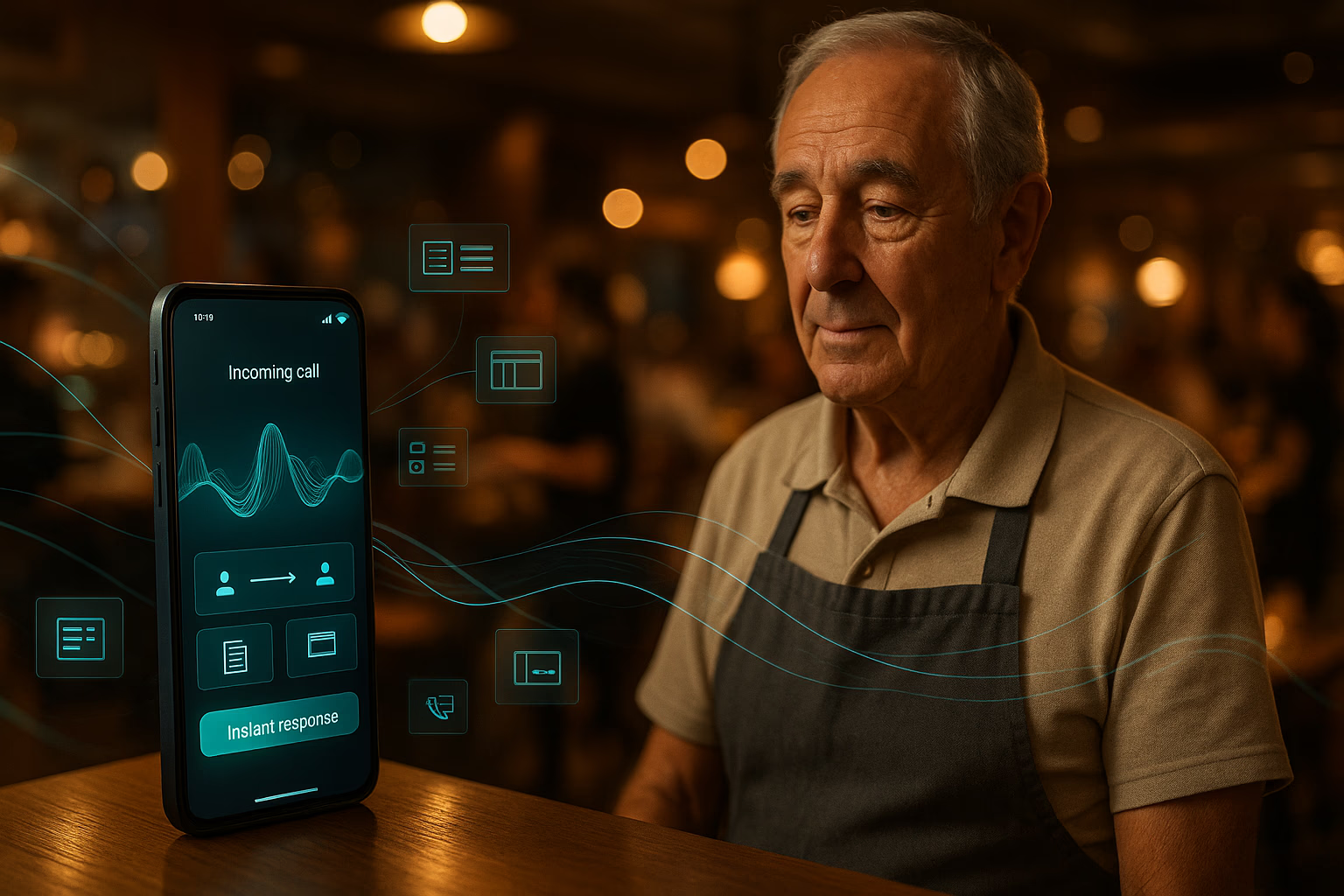
Most restaurant phone systems were built for a world that no longer exists. Busy phone lines, long wait times, and clunky IVR menus force customers to press buttons, listen to recordings, and repeat themselves. Operators already know the result: frustrated guests, missed orders, and staff constantly pulled away from diners to answer calls.
AI phone agents change that. They understand natural speech, answer instantly, and handle orders and reservations the way a trained staff member would. Instead of sending callers through robotic menus, AI responds conversationally, captures complete details, and keeps your team focused on the dining room.
This shift is why operators across the industry are replacing outdated IVR systems with modern restaurant AI. The difference is clear: one slows down your workflow, the other removes friction from it.
Key takeaways
- Eight in ten restaurant executives plan to increase AI investments in the next year to improve efficiency, guest experience, and loyalty programs.
- 85% of customers expect restaurants to offer digital ordering options, indicating a baseline expectation for digital integration.
- AI phone agents can answer multiple calls simultaneously, reducing missed orders and improving response time.
- Restaurants using AI phone systems report up to 30% faster call handling and up to 90% reduction in order errors.
- Studies show customers increasingly expect fast phone responses and may abandon calls when wait times are long.
How do AI phone agents outperform traditional IVR?
Unlike rigid IVR systems that rely on button presses and pre-recorded messages, AI phone agents are conversational.
They:
- Understand natural language: Customers can speak freely, ask about menu items, specials, or dietary restrictions, and receive accurate responses.
- Capture complete order details: Modifiers, special requests, and add-ons are recorded without errors, reducing mistakes in the kitchen.
- Handle multiple calls at once: No caller waits in line, even during peak hours, which means fewer lost orders and higher revenue capture.
- Integrate with POS systems: AI phone agents like Certus AI sync directly with Toast, Square, or Clover, automatically logging orders and reservations.
By replacing outdated IVR menus with an AI phone ordering system, restaurants can streamline operations, improve guest satisfaction, and free staff to focus on service rather than phone calls.
Why are restaurants making the switch?
The restaurant industry is facing rising customer expectations and staff shortages. Traditional IVR systems create bottlenecks: callers get frustrated, orders are missed, and staff are constantly interrupted.
Implementing an AI phone system addresses these challenges:
- Recover lost revenue: Every unanswered call is a missed opportunity. AI ensures every call is answered, even during peak hours.
- Reduce staff workload: Hosts and servers can focus on diners rather than managing phone calls.
- Improve customer experience: Conversational AI delivers faster, accurate, and consistent responses, enhancing satisfaction and loyalty.
- Scale effortlessly: As call volumes grow, AI systems handle more calls without the need to hire additional staff.
Modern AI phone agents also integrate directly with restaurant POS systems, ensuring every order flows into Toast, Square, or Clover without staff intervention. Certus AI’s POS integration makes the process seamless and cuts down on avoidable mistakes.
What are the key differences between IVR systems and AI phone agents?
Restaurants need a solution that keeps calls flowing, orders accurate, and staff focused on diners. Traditional IVR menus are rigid, while AI phone agents offer flexibility and intelligence tailored to restaurant operations. Here’s a side-by-side look at the main differences:
These differences make it clear why modern restaurants are moving away from IVR systems and adopting AI phone agents. By removing friction from the calling process, AI phone systems improve guest satisfaction, reduce missed orders, and allow teams to operate efficiently even during peak hours.
What does this mean for your restaurant?
The differences between traditional IVR systems and AI phone agents are not just technical. They directly impact how your staff works, how guests experience your service, and how much revenue your restaurant captures from phone orders.
Here is what operators and industry research are telling us:
- Customers expect speed and clarity on calls: According to Zendesk, 75% of customers say they expect a fast response when contacting a business, and slow interactions drive frustration and abandonment.
- Voice interactions remain a key preference for ordering and reservations, especially for complex or customized orders that don’t fit neatly into app menus. Restaurant operators are increasing tech investment. The National Restaurant Association’s research shows that technology adoption continues to grow across the industry as operators seek efficiency and better guest engagement.
What these trends show is simple: phone service matters, and how you handle it affects both revenue and reputational loyalty.
How do restaurants use AI phone systems in everyday workflows?
A restaurant AI phone agent becomes part of your restaurant workflow by taking over repetitive, high-volume tasks that used to rely on staff time. These include:
- Capturing takeout and delivery orders without hold times.
- Managing reservations and waitlists automatically.
- Answering common questions (menu items, hours, specials, dietary info).
- Handling after-hours inquiries so no opportunity disappears overnight.
This eliminates the friction that IVR systems introduce and lets your restaurant operate more reliably across all channels.
What’s next for restaurant phone workflows?
Traditional IVR systems were useful in a low-volume, rigid call environment.
Today’s restaurants demand systems that are:
- Conversational instead of menu-driven
- Integrated instead of isolated
- Intelligent instead of repetitive
This is why operators who want to capture more orders and reduce operational friction are choosing an AI call center for restaurants. If your restaurant still uses traditional IVR, you are leaving revenue on the table. Modernizing phone workflows with an AI phone agent means:
- Every call gets answered.
- Orders are captured accurately.
- Staff stay focused on diners.
- Your restaurant scales without extra hires.
For a deeper look at the implementation process, check out How to implement voice AI in restaurants.
Your next step toward smoother restaurant operations
Phone calls still drive a meaningful share of restaurant orders, but outdated IVR menus slow down guests and interrupt your staff. AI phone agents for restaurants change that by answering instantly, capturing complete order details, and keeping your team focused on service instead of the phone.
If your restaurant is looking to reduce missed orders, improve call handling, and run a leaner front-of-house without compromising guest experience, AI has moved from an add-on to a core part of how modern restaurants operate.
Want to see how this works in a real restaurant environment?
Book a free Certus AI demo and explore how much revenue you can protect by replacing IVR with a conversational AI phone agent.

.svg)
.svg)
.svg)
.svg)