.svg)

.svg)


Sysco buys Restaurant Depot: what owners need to know
Key takeaways
This is a massive deal, but it’s not finalized yet. Here’s what you need to focus on.
- Understand the deal: Sysco's $29.1 billion acquisition of Jetro Restaurant Depot is the largest in its history, but it still needs to pass regulatory approval, which could take months.
- Watch your costs: The promise of "separate operations" might not last. Start tracking your pricing now to create a baseline so you can spot changes as they happen.
- Diversify and control: Don't put all your eggs in one basket. Explore alternative suppliers and strengthen your direct customer channels to reduce your reliance on consolidating giants.
- Own your data: Your purchasing habits and customer relationships are valuable assets. Make sure your internal systems, like your POS, keep that data in your hands.
Introduction: Another big headline, another question mark for us
If you're an independent operator, you probably saw the headlines and got back to work. Wall Street deals feel distant from the reality of a Saturday morning warehouse run. But this one is different. For decades, Restaurant Depot has been the pricing check that keeps broadline distributors honest. Now, Sysco could own both sides of that equation.
I’m not here to tell you the sky is falling. I’m here to break down what actually happened, what it means for your food costs, and what you can control while the dust settles. Because in a consolidating industry, the operators who survive are the ones who see around corners and learn how to run a successful restaurant in 2026 by controlling what they can.
What actually happened: Breaking down the $29 billion deal
On March 30, 2026, Sysco announced its intent to acquire Jetro Holdings, the parent of Restaurant Depot, for $29.1 billion. The deal, a mix of cash and stock, is the largest in Sysco's history and is currently pending regulatory approval, which could take several months to a year. If approved, it will likely close in late 2026 or early 2027.
The players: Sysco and Restaurant Depot
Sysco is the world's largest foodservice distributor, serving over 700,000 locations like restaurants, hotels, and schools. They use a traditional delivery model, bringing products to your door with services like menu consultation. According to Companies History, Sysco has grown by acquiring regional distributors to expand its reach.
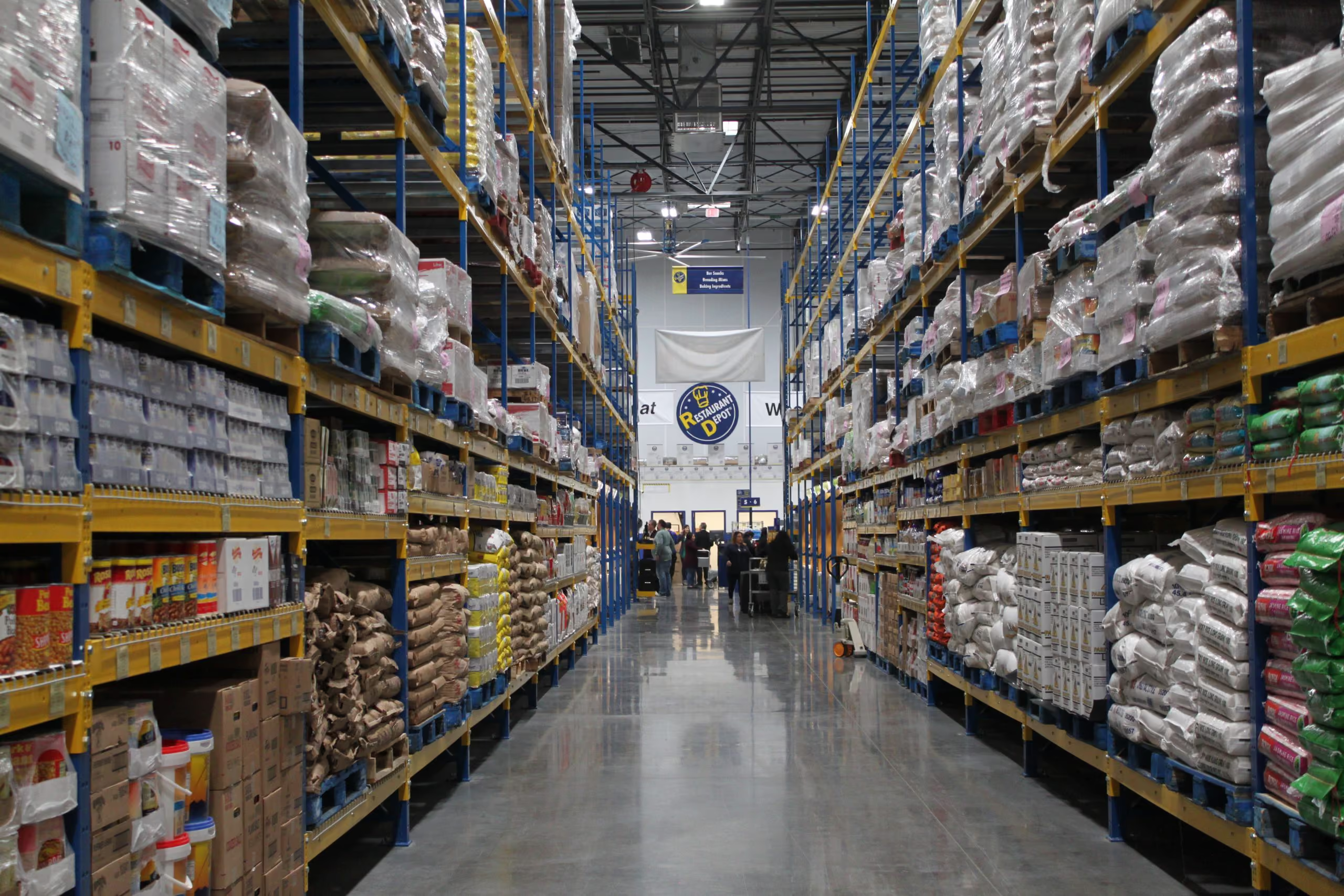
Restaurant Depot runs 166 cash-and-carry warehouses for about 725,000 independent restaurant customers. You drive there, load your cart, and check out. No delivery fees, no minimums, no sales reps. This model eliminates last-mile delivery costs, which industry analysis shows can be a third of traditional distribution expenses.
The price tag: Cash, stock, and a lot of zeros
The $29.1 billion figure breaks down to $21.6 billion in cash and 91.5 million shares of Sysco stock. To put that in perspective, Sysco's previous largest acquisition was the $3.1 billion purchase of Brakes Group in 2016. This deal is nearly ten times larger and includes Restaurant Depot's significant real estate portfolio.
Why "pending regulatory approval" matters
This deal isn't done.
The Federal Trade Commission (FTC) will review it for antitrust concerns. When the country's largest food distributor buys the largest cash-and-carry operator, regulators pay close attention. The review could take six to twelve months, and there's a real possibility the deal gets blocked or requires changes. In 2015, the FTC successfully sued to block Sysco's smaller attempt to acquire US Foods.
Your cash-and-carry advantage: will it last under Sysco?
This acquisition puts the future of Restaurant Depot's cash-and-carry model in question. While Sysco promises to keep it separate for now, the 15-20% savings operators enjoy could erode over time as Sysco seeks to integrate operations, consolidate purchasing, and capture more margin from its new asset. This is the core question for your bottom line.
"Restaurant Depot stays separate" (for now)
Sysco CEO Kevin Hourican said that Restaurant Depot will operate as a standalone business. He assured customers they can still choose their preferred fulfillment method, whether it's delivery from Sysco or a trip to the warehouse. This is similar to what Sysco said when they acquired Brakes Group in 2016.
But acquisitions are about integration. Over time, systems merge and operations consolidate to create efficiency. The real question isn't if Restaurant Depot will change, but when and how much.
The pricing question: 15-20% savings on the line?
According to Sysco's own management, prices at Restaurant Depot run 15% to 20% lower than at traditional distributors. That gap exists because you do the work. You drive, you load, and you haul. You aren't paying for a sales rep or a delivery driver.
Sysco didn't spend $29 billion to keep that gap. They spent it to capture margin. The most likely scenario is a gradual erosion of that 15-20% advantage. Maybe prices creep up, or new fees or membership tiers appear. This is why finding ways to save money in your restaurant with technology is a critical defense against rising supplier costs.
Your purchases, now part of Sysco's system
Here’s the part most operators aren't thinking about. Every time you swipe your Restaurant Depot card, you're creating valuable data about what you buy, how often, and in what quantities. Large food distributors already use customer data to spot trends and optimize their supply chains.
With this deal, Sysco gets a complete view of your spending across both channels. They'll know when you're price shopping and which products you prefer from each. They'll use that information to optimize their margin, not yours. It's a reminder that understanding key voice AI ROI indicators is crucial for tracking your own profitability.
Navigating the immediate future: what you can do now
Independent owners should respond to this news with caution, not panic. The best immediate actions are to start meticulously tracking food costs to create a baseline, explore and build relationships with alternative local or regional suppliers, and closely monitor all communications from both Sysco and Restaurant Depot for changes.
Don't panic, but stay alert
This is a long game. Even if the deal closes, big changes won't happen overnight. Sysco will spend months integrating systems and aligning operations. You have time to prepare. But preparation starts with awareness. Pay attention to communications from both companies. Read the emails you usually delete. Understand any new programs or pricing structures before you commit.
Watch your pricing and terms closely
Start tracking your costs now. Create a simple spreadsheet with your top 20-30 items. Record what you pay at Restaurant Depot, what Sysco quotes you, and what other suppliers charge. Update it monthly. When prices move, you'll have data, not just a feeling. Also, watch for new membership fees, restocking fees, or delivery surcharges. These are ways companies increase revenue without raising list prices.
Explore your sourcing options
Diversification is your hedge against consolidation. If you depend entirely on Sysco and Restaurant Depot, you're exposed. Start building relationships with alternative suppliers now. Look for local or regional distributors who may be more flexible on pricing. Research specialty suppliers for high-volume items like protein or produce. It's more work to manage more vendors, but it's also insurance against a supply chain that no longer works in your favor.
Why owning your customer relationships matters more than ever
In a consolidating market, owning your direct customer relationships is more critical than ever. This means leveraging your own technology, like your POS and phone system, to control your data, customer interactions, and ordering channels. This internal strength provides the best defense against dependency on large, consolidating suppliers.
Your POS: The heart of your operation
Your Point of Sale (POS) system is more than a cash register. It's your direct link to sales data, inventory, and customer preferences. Every transaction is data you own. While Sysco builds a profile on you from your purchases, your POS data tells you what's selling, what your margins are, and where you're making money. Integrating your ordering systems directly with your POS keeps that vital information in your hands.
How to use your phoneline as a direct connection, not a bottleneck
Your phone line is a direct, commission-free channel to your customers. In a world of consolidating giants, that direct relationship is priceless. The challenge is that phone ordering is labor-intensive. During a rush, calls go unanswered and revenue is lost.
The solution isn't to outsource that channel to a third party that takes a cut. It's to automate it while keeping control. Tools like Certus AI that handle phone ordering directly through your POS keep the customer relationship in your hands. The order goes straight into your system, you own the data, and you keep the margin.
Building resilience through operational control
The best hedge against external market shifts is a strong, efficient internal operation. When you control your customer touchpoints, your data, and your ordering channels, you're less vulnerable to what happens in the supply chain. This doesn't mean you stop using Sysco or Restaurant Depot. It means you use them strategically, not dependently. If you're exploring technology, a restaurant voice AI buyer's guide can help you make an informed decision.
Control what you can
That leverage is changing. The operators who thrive will be the ones who build their own leverage, not through a receipt, but through tight operations, diversified suppliers, and direct customer relationships they own. This deal will close or it won't. Prices will change or they won't. Your ability to run a profitable restaurant depends on what you do. Track your costs, diversify your suppliers, and invest in the systems that keep your business in your control.
About the author & Certus AI
Gurveer Singh is the Co-Founder and CEO of Certus AI. He grew up in his family's restaurant business, taking phone orders at age 9 and managing front-of-house operations across 11 locations by age 16. He writes about restaurant operations, technology, and industry trends from the perspective of an operator, not a vendor.
Certus AI helps restaurants grow by answering every phone call with a human-like AI agent. To see more of Gurveer's insights on mastering restaurant economics, check out the Certus AI YouTube channel at https://www.youtube.com/@certus-ai.
Frequently asked questions about the Sysco-Restaurant Depot deal
Will Restaurant Depot stores close or change their format?
Sysco has stated that Restaurant Depot will continue operating as a standalone business with its existing warehouse format. However, over time, you may see changes to the product mix or membership structures as Sysco integrates operations. Monitor communications from Restaurant Depot for any announced changes.
How will this affect my current pricing at Restaurant Depot?
Pricing changes are unlikely to happen immediately. Once the acquisition closes, watch for gradual shifts. The 15-20% price advantage Restaurant Depot offers will likely narrow over time. Start tracking your costs now on your top items so you have a baseline to measure against.
Is there anything I can do to prepare for these changes?
Yes. First, document your current costs at all your suppliers. Second, start building relationships with alternative suppliers now, while you still have negotiating leverage. Third, strengthen your direct customer channels so you're less dependent on any single supplier or platform.
Will Sysco now have access to my purchasing history from Restaurant Depot?
Once the acquisition closes, yes. Sysco will have visibility into what you purchase at Restaurant Depot. They'll use this data to optimize their supply chain and potentially tailor their sales approach to your business. This is why owning your internal data becomes even more valuable.
What if I use both Sysco and Restaurant Depot already?
Many operators use Sysco for bulk delivery and Restaurant Depot for quick restocking. The acquisition means Sysco will now see both sides of your purchasing. They may introduce programs to incentivize you to consolidate your spending. Evaluate any new loyalty programs carefully to ensure the savings are real.

.svg)
.svg)
.svg)
.svg)