.svg)

.svg)


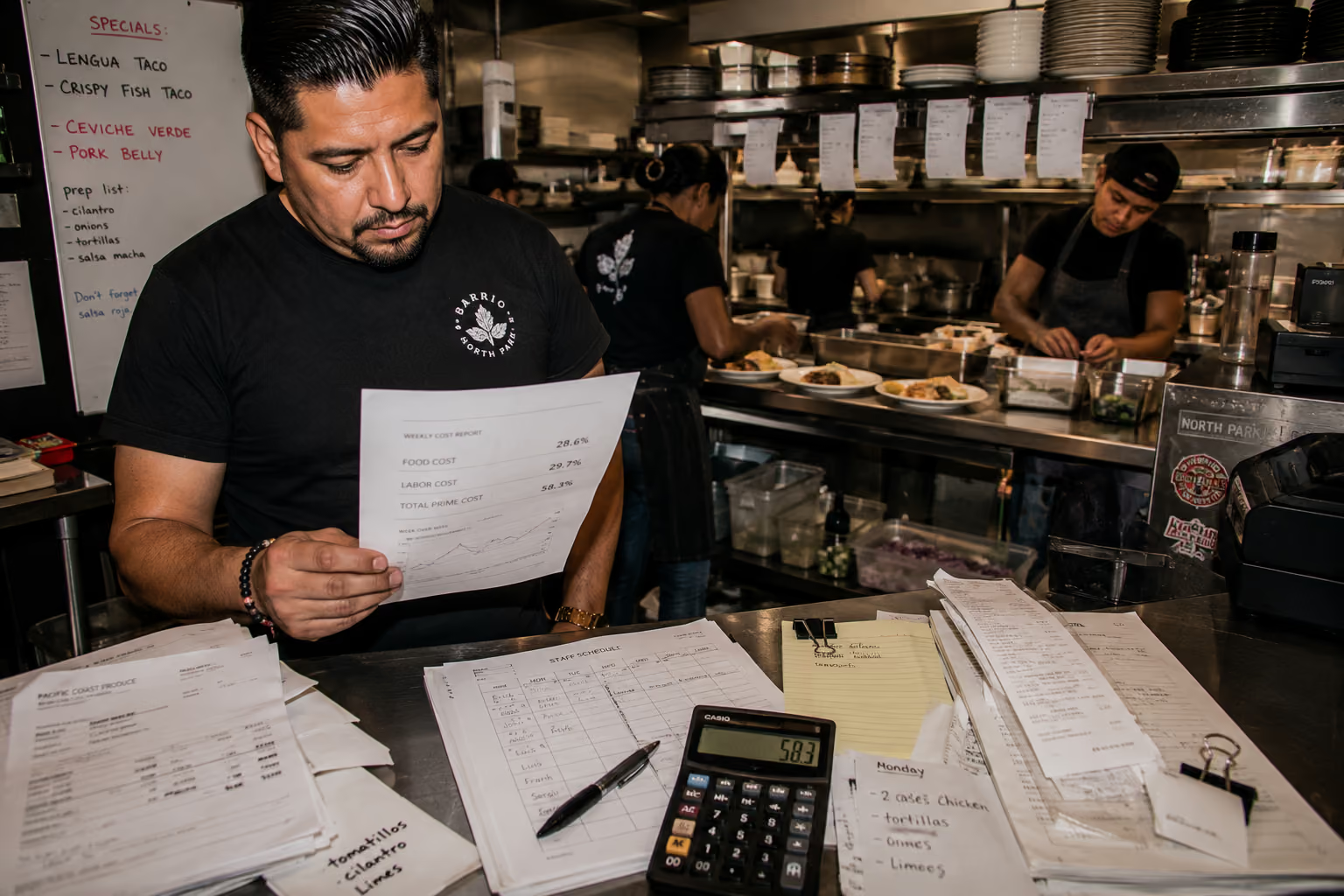
A report crossed my desk last week that put a number on something I have been watching all year.
Restaurant365 surveyed more than 420 operators running nearly 10,000 US locations for its mid-year industry report. The cost side reads like every conversation I have with operators right now. 87% saw food costs rise in the first half of the year. 77% saw labor costs rise. 78% expect food to keep climbing through December.
Same report, different group of operators, different story. Among restaurants using AI somewhere in their operation, 61% report lower food costs. 62% report lower labor costs. 88% say it saves them time every single week.
Restaurant365 calls this the profitability gap. I call it the thing that decides which restaurants are still here in three years.
The squeeze is real, and it is not evenly shared
Start with the honest picture. Costs are up almost everywhere. Traffic looks better on paper, with 49% of operators reporting gains, up from 28% at the start of the year. But a lot of that headline growth is menu prices doing the lifting rather than more covers walking in.
So the average operator is paying more for beef, paying more for staff, and charging more to cover it. That works until your regulars decide the third price rise was one too many. I wrote about the maths of that trap in my food cost guide, and nothing in this report changes it: you cannot price your way out of a cost problem forever.
Which is why the AI adoption numbers matter. At the start of the year, roughly a quarter of operators were using AI for reporting and analytics. By mid-year it was 69%, either live or piloting. That is not early adopters anymore. That is the middle of the market moving.
What the gap actually is
Be careful with survey numbers like "61% report lower food costs." It does not mean AI waved a wand over the walk-in. It means the operators who measure things closely are the same operators who adopt tools, and the tools make the measuring faster.
I ran 11 of my family's restaurants growing up, and the difference between our good years and our bad years was never one big decision. It was whether we caught the leaks early. The over-portioned protein. The supplier price that crept up without a call. The Friday schedule built for a Tuesday. AI does not fix any of those. It shows you them on Monday instead of at month end, and the fixing is still your job.
That is the real profitability gap: speed of seeing. The operators pulling ahead are not smarter. They see their numbers sooner and act while the leak is small.
Where AI actually pays in a restaurant right now
I have written before about what works for independents and what is hype, so here is the short version, updated for what this report shows.
Reporting and analytics. This is the 69% adoption number, and it is the least glamorous and most proven use. If your food cost, labor cost, and prime cost still live in a spreadsheet you update monthly, this is the first move.
The phone. This is the one I build for, so weigh my view accordingly, but the logic is simple: labor is your biggest controllable cost, and answering the phone is labor that produces nothing when it interrupts a server mid-table and everything when it captures a $200 catering order. At Certus we see restaurants recover an average of $3,000 a week in phone orders that were previously ringing out. That lands on the revenue side, which is the side of the profitability gap nobody surveys.
Scheduling against real demand. Building rotas from actual cover patterns instead of habit. This is where the "62% report lower labor costs" number mostly comes from in my experience.
What is still mostly hype: AI menu invention, chatbot marketing, anything that promises to run your restaurant for you. The gap is made of boring tools, used weekly.
What I would do with this report if I ran one restaurant
- Run your numbers tonight. Food cost percentage, labor cost percentage, add them together. If you have not done it this month, you are on the wrong side of the gap by definition, tools or no tools. The prime cost guide takes ten minutes.
- Pick one leak, not one platform. Do not buy a suite. Find your biggest weekly leak - food waste, over-staffed shifts, missed calls - and put one tool against it. Measure for a month.
- Count your missed calls for one week. A tally sheet by the till is enough. If the number surprises you, that is your revenue-side leak, and it is the fastest one to close. Certus AI answers every call in English or Spanish, takes the order, and sends it straight into Toast, Square, Clover, Skytab, or Aloha NCR, on flat monthly pricing with same-day setup.
The operators on the good side of this gap did not get there with a big bang. They got there one boring Monday number at a time.
Want to see which side of the gap your phone puts you on? Book a demo. Twenty minutes, and you will know.
References
- Restaurant365, "2026 State of the Restaurant Industry: Mid-Year Report" (survey of 420+ operators, ~10,000 locations) - restaurant365.com
- Restaurant365 / PR Newswire, "Restaurant365 Research Identifies a New Restaurant Profitability Gap" (July 16, 2026) - morningstar.com
- National Restaurant Association, "2026 State of the Restaurant Industry" - restaurant.org

.svg)
.svg)
.svg)
.svg)