.svg)

.svg)


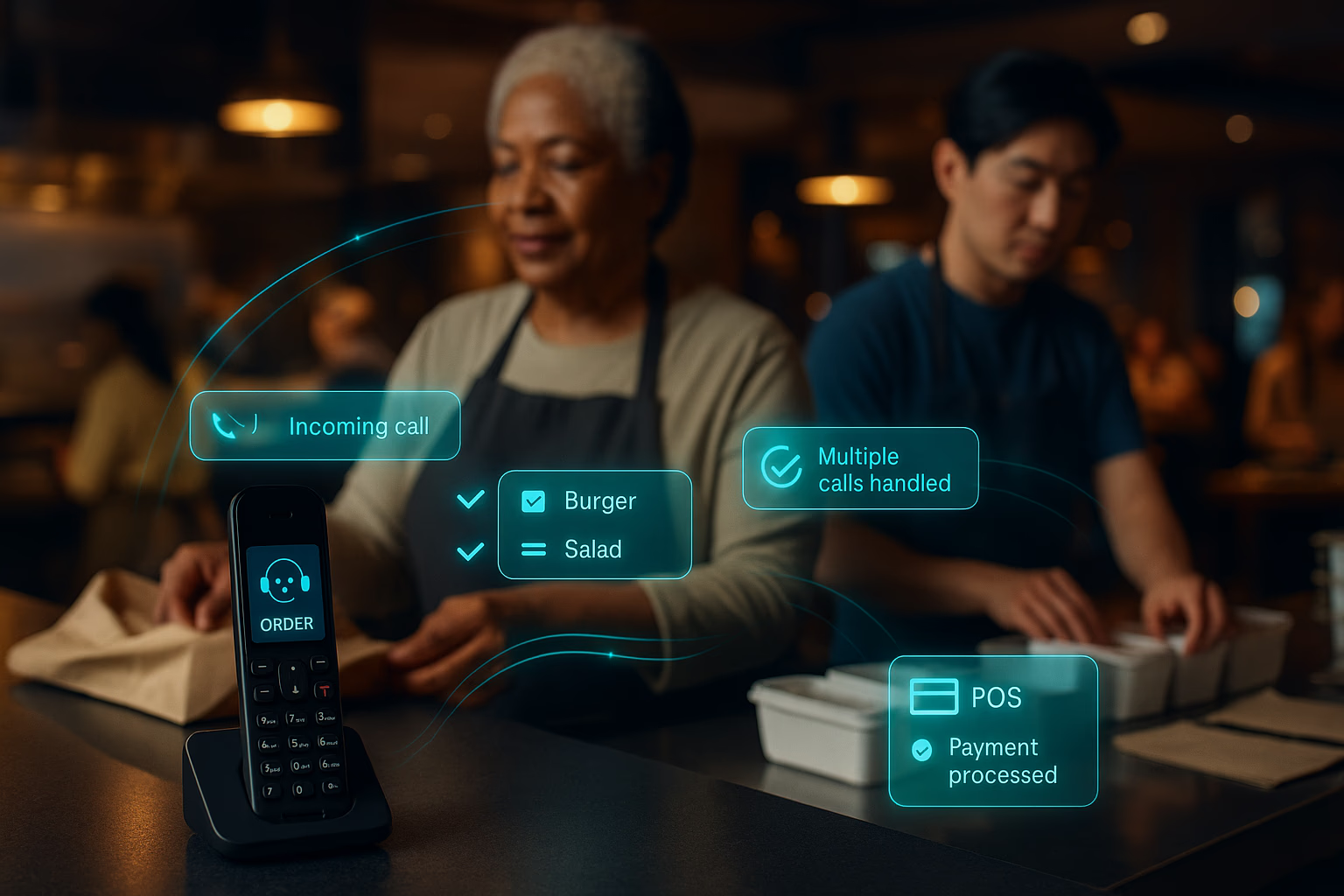
Tring. Tring. 📞
Maybe it’s a big order… or maybe it’s someone asking your hours for the fourth time today. Either way, the phone never waits; it just grabs whoever is closest, even in the middle of service.
And when no one picks up? The customer moves on to the next restaurant.
Now imagine every call getting handled instantly. No interruptions, no missed orders, no “hold please.
That’s what an AI phone agent does. It answers questions, takes orders accurately, and keeps your team focused on diners, not ringing phones.
Here’s how it works inside real restaurants and how you can set it up.
Restaurant Order Automation with an AI Phone
AI phone agents help restaurants capture more orders by answering every call instantly, often recovering $15K–$25K in missed revenue each year. They take accurate orders, handle peak-hour call spikes, and sync directly with POS systems like Toast or Square without adding workload to your staff. With 24/7 availability, zero wait times, and consistent order accuracy, they reduce interruptions, improve guest experience, and streamline daily operations.
Why do restaurants struggle with high call volumes?
Most restaurants see call spikes during the same times they’re busiest inside the dining room. Hosts are seating tables, servers are running food, and the kitchen is pushing out tickets, which means answering the phone isn’t always possible.
A few realities define the problem:
- A significant share of restaurant calls go unanswered during peak hours.
- Staff can manage only one caller at a time, even with multi-line phones.
- A single long call can slow down greeting guests, packing orders, or coordinating the floor.
When several calls land at once, even well-staffed teams can’t pick up fast enough, and customers move on quickly when they can’t get through.
How do missed calls impact daily revenue?
For most restaurants, every missed call represents an order that would have been placed if someone had picked up. Industry estimates show that restaurants lose a meaningful percentage of phone orders due to busy lines or long wait times.
If a restaurant misses even 20–30 calls a week, that can add up to thousands of dollars in lost orders annually, depending on ticket size and call volume. The real challenge? Most guests won’t leave a voicemail or try again; they simply order from a competitor.
When phone lines can’t keep up, revenue slips away quietly, and the long-term customer relationship often disappears with it.
Customers expect faster phone responses than ever
Today’s diners don’t have the patience to wait on hold. Customer patience for phone hold times has collapsed. 91% of customers expect to be on hold for three minutes or less, but 51% hang up after one minute or less.
People who are used to tapping an app for instant ordering won’t wait through a long hold or a ringing line. They want immediate clarity, be it about menu questions, wait times, pickup options, or a fast way to place an order.
AI call centers for restaurants solve that gap by giving callers an instant response and guiding them through the order without making them wait. Staff stay focused on guests in front of them, while the system captures the calls that would have otherwise been missed.
What are the core benefits of restaurant order automation with an AI phone agent?
Implementing restaurant order automation with an AI phone agent gives restaurants practical advantages that improve both operations and customer experience.
1. Never miss a call With automated phone answering, every call is picked up, even during the busiest lunch and dinner shifts. No more lost orders or missed reservation requests.
2. Handle multiple calls at once
Unlike human staff who can manage only one call at a time, an AI phone agent can manage several incoming calls simultaneously without putting customers on hold.
3. Accurate order taking
Orders are recorded consistently, including modifiers and special requests, which reduces mistakes and ensures the kitchen gets the correct information the first time.
4. Allow staff to focus on guests
Front-of-house and kitchen staff can focus on serving diners instead of being interrupted by ringing phones. This leads to smoother service and happier customers.
5. Cost-effective and scalable
Automation handles high call volumes without additional hires. Restaurants can maintain service quality even during peak hours without increasing payroll.
6. Consistent customer communication
Every caller receives accurate and up-to-date information about the menu, hours, or reservations, which helps build trust and professionalism.
How restaurant order automation works: step by step
Implementing restaurant order automation with an AI phone agent doesn’t require changing your entire workflow. The system works alongside your staff, handling repetitive tasks while keeping the customer experience smooth. Here’s how it works in practice:
1. Instant call answering
As soon as a customer dials, the AI phone agent picks up. No ringing, no wait, no missed orders, every caller gets attention, even during peak lunch or dinner hours.
2. Guided menu assistance
Callers can ask about menu items, specials, dietary preferences, or combos. The system provides accurate, up-to-date information that matches your kitchen and online menus.
3. Accurate order capture
The AI records orders with full details, including modifiers, add-ons, and special requests. Mistakes from misheard items or multitasking staff are minimized, ensuring the kitchen receives the correct order every time.
4. Payment handling
If your restaurant supports phone payments, the system can process them securely. This reduces errors at pickup and streamlines the handoff between the customer and staff.
5. POS integration
Integrating restaurant Voice AI with a POS means that orders are sent directly to your POS system, such as Toast, Square, or Clover, without any manual input. This keeps the workflow clean and lets your kitchen start preparing orders immediately.
6. Staff Notifications for Exceptions Only
Your team only steps in for unique requests or situations that require a human touch. Routine calls and orders are fully managed by the system, freeing staff to focus on guest experience.
By following these steps, restaurant order automation ensures no call goes unanswered, every order is accurate, and your staff can stay focused on hospitality instead of juggling phones.
Tracking orders with transcription and analytics
Beyond capturing calls and automating orders, restaurant order automation can provide valuable insights through transcription and analytics. Services like Casting Words can convert phone orders into text, helping managers review call accuracy, track customer preferences, and identify trends without listening to every call.
These transcripts support staff training, ensure order accuracy, and provide a clear record for any disputes or follow-ups. Analytics dashboards can also highlight peak call times, menu items in demand, and recurring questions, giving managers actionable data to optimize operations.
Curious how modern tech is changing the way restaurants serve guests? Watch our video to see it in action:
Measurable results from automated phone orders
By now it is obvious that restaurants can save money with AI.
Automated phone systems lead to measurable improvements:
- Revenue recovery: Capturing missed calls can recover $15K–$25K in annual phone orders.
- Order accuracy: Reduced mistakes and clearer instructions lead to fewer complaints and smoother kitchen operations.
- Staff efficiency: Front-of-house and kitchen teams spend more time serving guests instead of juggling phones.
- Customer satisfaction: Faster responses, consistent communication, and 24/7 availability keep diners happy and returning.
Some restaurants even see order value increase by over 300% when combining automation with smart prompts for add-ons and specials.
Restaurant Order Automation with AI: The Wrap-up
Managing incoming calls shouldn’t slow down your service. Missed orders, long hold times, and misheard requests are challenges that every restaurant knows all too well.
Restaurants that adopt an AI phone agent are seeing measurable improvements, more orders captured, smoother service, and staff free to focus on guests instead of juggling phones.
Ready to transform how your restaurant handles calls? Schedule a demo with Certus AI and discover how your team can start capturing every order and every opportunity without adding extra workload.
In short, let your team focus on guests, not phones!
Common questions about restaurant order automation
1. What is restaurant order automation with an AI phone agent?
It’s a system that answers incoming calls, takes orders accurately, processes payments if needed, and sends them directly to your POS. It frees staff from juggling phones while keeping service smooth.
2. How quickly can a restaurant implement this system?
Most restaurants can set up an AI phone agent in just 45 minutes, with minimal training required for staff. Integration with POS systems like Toast, Square, or Clover is usually straightforward.
3. Will it replace my staff?
No. The system handles routine phone calls and orders, allowing your team to focus on in-person service and complex requests that require a human touch.
4. How does it improve order accuracy?
Automated systems capture every detail consistently; modifiers, special requests, and menu items, reducing mistakes that can happen when staff are multitasking.
5. Can it handle high call volumes?
Yes. Unlike humans, an AI phone agent for restaurants can manage multiple calls simultaneously without putting customers on hold, ensuring every call is answered.
6. Can I track performance and get insights?
Absolutely. Many systems provide call transcription and analytics, helping managers monitor accuracy, peak times, popular items, and customer preferences to optimize operations.

.svg)
.svg)
.svg)
.svg)