.svg)

.svg)


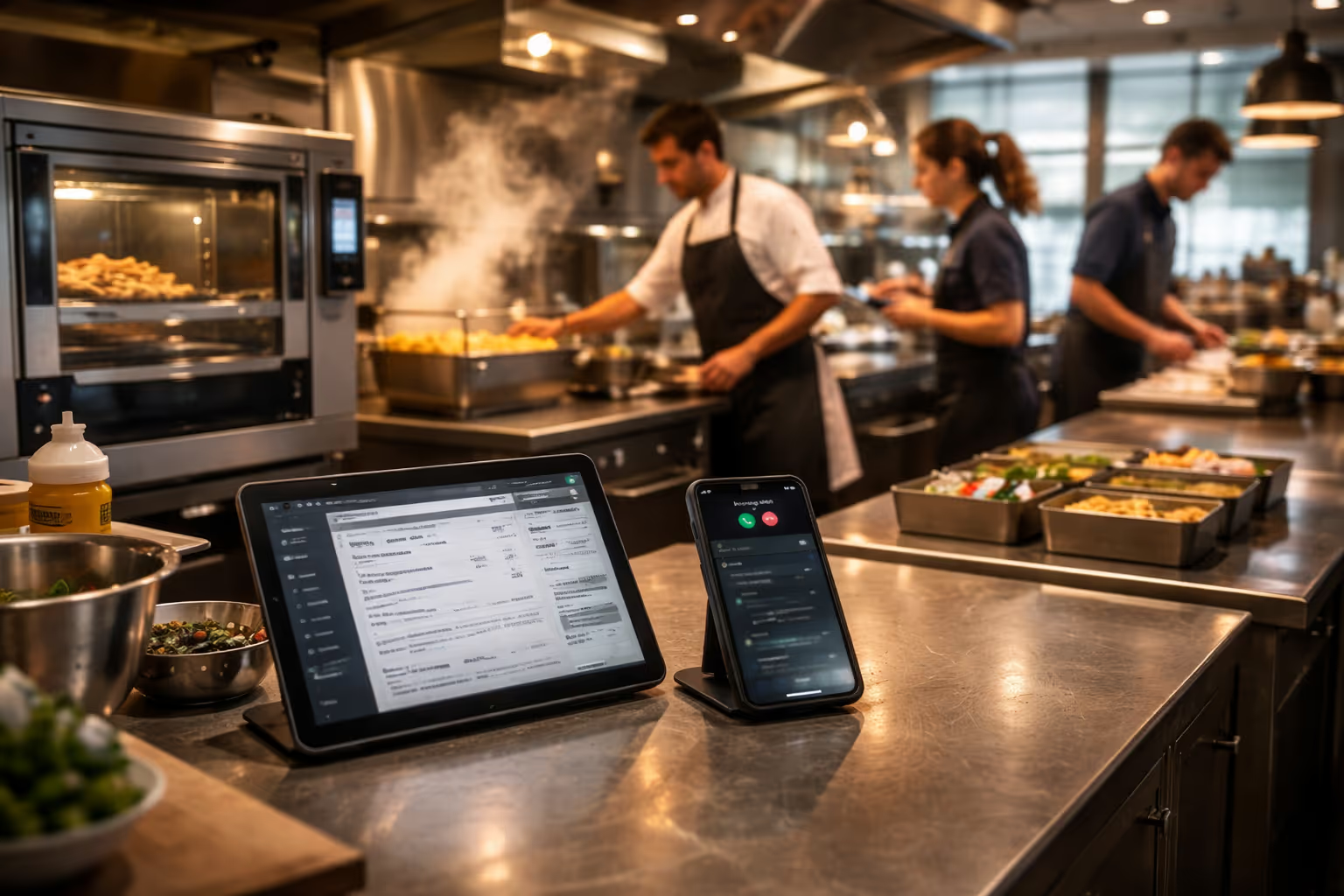
Restaurant automation is already part of daily operations. From phone ordering to scheduling and payments, technology now sits at the center of how restaurants run. As 2026 approaches, the focus shifts from adoption to impact, choosing automation that improves speed, accuracy, and margins.
Labor costs continue to rise. Food costs remain tight. Guests expect quick service and smooth digital interactions. Restaurants pulling ahead in 2026 are using automation with clear intent, targeting specific operational gaps instead of adding tools for the sake of it.
Below are the automation trends shaping how restaurant teams operate this year.
1. Voice AI takes over phone operations
Phone ordering automation has moved from experimental to essential. Voice AI systems now handle complex restaurant orders with 97% accuracy, according to industry data.
Why this matters now:
- 47% of restaurants plan to increase automation to address staffing shortages.
- Voice ordering systems report 35% faster order processing during peak hours.
- Major chains, including Chipotle and McDonald's,s are deploying voice AI in drive-thrus.
The technology works. Customers call, the AI answers instantly, takes the complete order with modifications, processes payment, and sends the ticket to your kitchen display. No hold times. No missed calls. No staff interruption.
Restaurant order automation with AI phone agents demonstrates how this technology captures revenue that would have been lost when calls went unanswered during rushes.
For restaurants handling 100+ phone orders weekly, AI phone systems pay for themselves within weeks by recovering missed calls alone.
2. Kitchen automation against staffing problems
The back of the house is automating rapidly. Robotic equipment now handles repetitive cooking tasks with precision and consistency.
Current kitchen automation includes:
- Automated fryers that adjust temperature and timing based on food type.
- Robotic arms that assemble bowls and salads on digital makelines.
- Smart ovens that monitor internal food temperatures and adjust cook times.
- Automated prep equipment that reduces knife work and speeds production.
3. Restaurants move toward connected systems
The era of disconnected point solutions is ending. Restaurant operators are demanding integrated platforms that communicate seamlessly.
Major restaurant tech mergers signal this shift. The Crunchtime and QSR Automations integration shows how the industry is consolidating around comprehensive platforms rather than fragmented tools.
For operators, this means fewer vendors to manage, less duplicate data entry, and better insights from connected systems.
4. How AI helps restaurants plan ahead
Nowadays AI does more than just answer phones. It can help forecast demand, plan schedules, and cut waste.
Predictive AI applications in restaurants:
- Demand forecasting that analyzes historical sales, weather, local events, and social trends.
- Dynamic scheduling that matches staff levels to predicted traffic.
- Inventory optimization that reduces food waste by 40% according to industry reports.
- Menu engineering that identifies high-margin items and optimal pricing.
The technology is accessible. Cloud-based AI platforms now offer subscription models starting under $500 monthly, making sophisticated analytics available to independent restaurants.
5. More subscription models and loyalty programs
Subscription-based dining is gaining traction. Coffee subscriptions led the way. Now, broader restaurant categories are testing recurring revenue models.
Subscription program examples:
- Panera's Unlimited Sip Club offers unlimited coffee and beverages.
- Pret a Manger's Club Pret provides daily drink subscriptions.
- Blank Street Coffee's Regulars program reached 5,000 paying members within four months of launch.
Subscription services create predictable revenue and increase visit frequency. Members visit more often to maximize their subscription value, driving higher lifetime customer value.
Loyalty programs continue evolving beyond simple points systems. 80% of adults say being part of a loyalty program influences where they choose to dine. 52% of consumers participate in restaurant loyalty programs.
Modern loyalty platforms use AI to personalize offers based on individual preferences and purchase history, making rewards feel relevant rather than generic.
6. Data management becomes an operational priority
As restaurants adopt more automation, data quality becomes critical. AI and analytics only work well with clean, consistent data.
Restaurant executives are recognizing that disconnected data creates blind spots. When your POS, inventory, payroll, and reservation systems don't communicate, you're making decisions with incomplete information.
Data management priorities for 2026:
- Standardized data labeling across all systems.
- One place where all data comes together.
- Dedicated data leads or Chief Data Officers at larger restaurant groups.
- Real-time data syncing between platforms.
Better data enables better decisions. Accurate sales data feeds more precise inventory ordering. Integrated payroll and scheduling data reveal true labor costs per menu item. Connected customer data enables personalized marketing.
Top restaurant technologies in 2026 share one common thread. They all generate and consume data. Managing that data effectively multiplies the value of every system.
7. Personalization reaches new levels
Generic experiences don't cut it anymore. Customers expect restaurants to remember their preferences and deliver tailored service.
AI-powered personalization engines increase average order value by 18-26% through smart recommendations. This goes far beyond "You might also like..."
Advanced personalization includes:
- Voice AI that remembers returning customers and their usual orders.
- Menu recommendations based on dietary restrictions and past preferences.
- Targeted promotions are sent when AI predicts a customer is likely to order.
- Dynamic pricing that adjusts based on demand and customer value.
The key is making personalization feel natural, not creepy. Customers appreciate being recognized and having preferences remembered. They don't appreciate feeling surveilled.
Systems like those used by leading brands, following strategies and technologies Domino's Pizza uses, demonstrate how comprehensive tracking and personalization drive customer loyalty when implemented thoughtfully.
8. AI call centers transform customer service
Traditional call center operations are being replaced by AI-powered ordering systems that handle customer inquiries, complaints, and orders simultaneously.
AI call centers for restaurants operate 24/7 without staffing costs scaling with volume. The AI handles routine questions about hours, menu items, and allergens while escalating complex issues to human staff.
AI call center capabilities:
- Multi-language support for diverse customer bases.
- Consistent brand voice across all interactions.
- Instant access to the complete menu and operational information.
- Seamless escalation to staff when needed.
The customer experience improves because calls get answered instantly. No hold music. No "your call is important to us" messages. Just immediate, helpful responses.
For restaurants, this means capturing revenue from after-hours calls, reducing staff stress during peak periods, and ensuring consistent customer service quality.
What restaurant automation costs
Automation investment ranges dramatically based on specific needs and restaurant size.
The key question is not costing but the value it provides. A $500 monthly voice AI system that captures $5,000 in previously missed orders pays for itself immediately.
Most automation investments focus on solving specific operational problems. Missed calls cost revenue. Voice AI for restaurants solves that. Labor shortages slow service. Kitchen automation addresses that. Disconnected systems waste time. Unified platforms fix that.
How to prioritize automation investments
Not every restaurant needs every automation technology. Start by identifying your biggest operational pain points.
Prioritization framework:
- Calculate the current cost of the problem (lost revenue, wasted labor, excess food waste).
- Evaluate automation solutions that address that specific issue.
- Compare solution costs against problem costs.
- Start with the highest ROI opportunities first.
- Expand automation as each system proves its value.
Kitchen automation makes sense when labor shortages actively limit your capacity. If you could serve more customers but can't find prep staff, robotic equipment that handles repetitive tasks suddenly becomes worth the investment.
Choosing the right AI for restaurant automation in 2026
Restaurant automation in 2026 represents a turning point. The technologies that seemed futuristic three years ago are now proven, accessible, and increasingly essential for competitive operations.
Restaurants doing well this year use automation to support what they already do best. Routine tasks run in the background, giving staff more time to focus on guests. The right technology helps teams stay present and deliver better experiences.
An AI phone ordering system captures every order accurately, routes it efficiently, and integrates smoothly with daily operations, helping restaurants run more reliably and reduce missed revenue.
Ready to explore how automation can transform your restaurant operations?
Book a demo with Certus AI and discover how voice AI captures every order without adding work for your team. Your restaurant phone assistant could go live tomorrow! 🎉

.svg)
.svg)
.svg)
.svg)