.svg)

.svg)


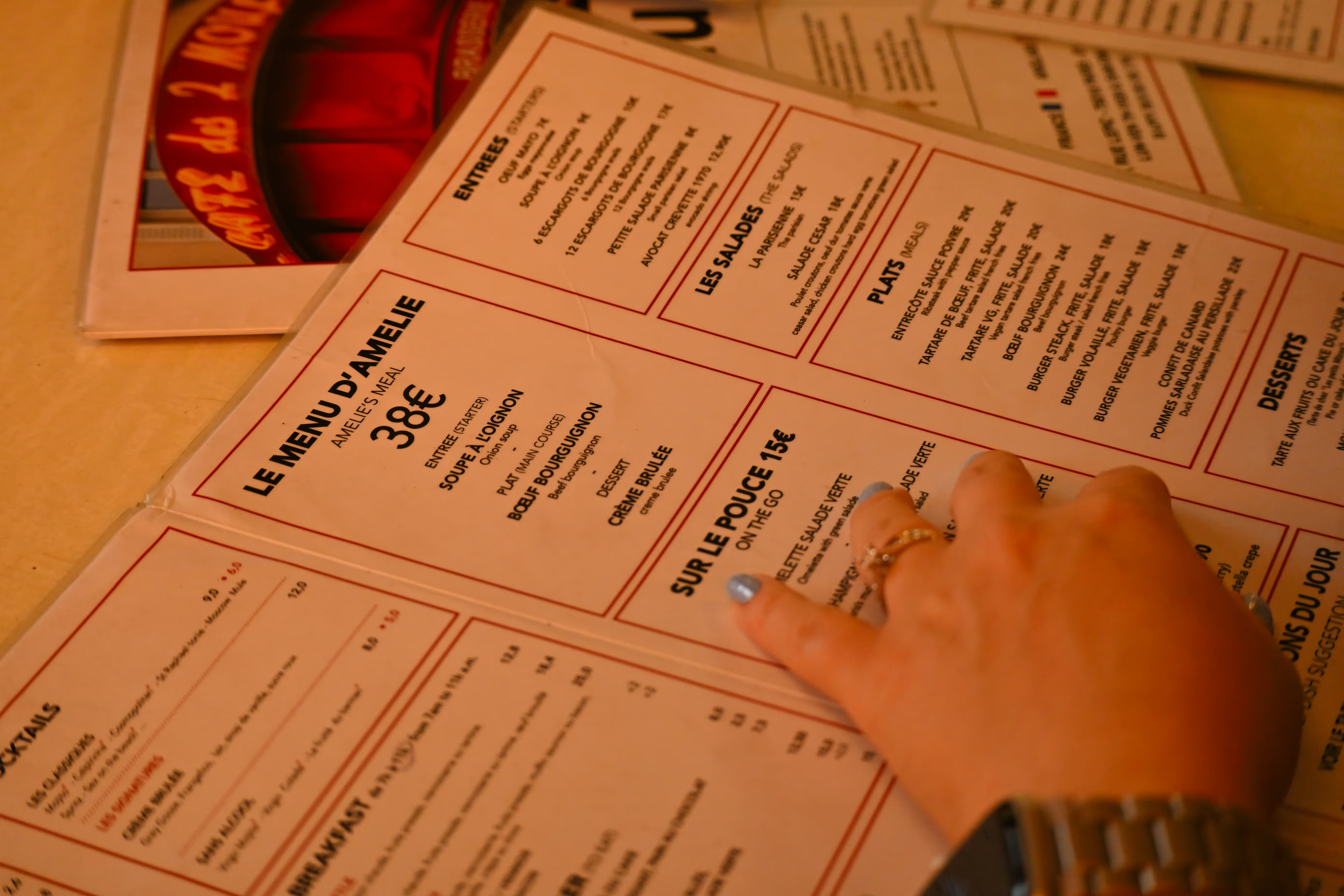
The menu changed yesterday. A seasonal special was added, an out-of-stock item was removed, and a price was adjusted. The website shows the new menu. The POS reflects the changes. Printed menus are correct.
But the phone system? Still telling customers about items that stopped being served two weeks ago.
Traditional phone systems can't keep up with how fast restaurant menus change in 2026. Static menus are fading out as restaurants update menus based on time of day, stock levels, and what customers order most. Most phone ordering systems weren't built for this reality.
Why menu changes break traditional phone systems
Restaurants change menus more frequently than ever. Seasonal ingredients rotate in and out. Limited-time offers come and go. Prices adjust with ingredient costs. Items sell out during busy periods.
Traditional phone systems can't adapt to this pace:
1. Staff training lags behind changes: The menu updates, but servers and hosts need time to learn new items, pricing, and modifications
2. IVR systems require manual updates: Basic automated phone systems need IT support or vendor updates to change menu options, taking days or weeks
3. Printed scripts become outdated: Team scripts or cheat sheets go stale the moment anything changes
4. No real-time inventory awareness: Traditional systems can't tell customers when popular items just sold out
The result? Customers call wanting the seasonal pasta they saw on Instagram, but the phone system doesn't know it exists. Or they order a combo that's no longer available, creating frustration when staff have to correct the order.
How AI phone ordering handles dynamic menus
AI phone ordering systems solve the menu update problem by connecting directly to menu management systems and POS. When something changes in the menu, the AI knows about it immediately.
What changes when phone systems stay synchronized with actual menus:
- Instant menu awareness: Update a price, add a special, or mark an item as sold out, and the AI reflects that change on the next call.
- Time-based menu switching: Different menus for lunch and dinner, or breakfast items only during morning hours. AI phone ordering systems automatically switch between menu configurations based on time of day.
- Stock-aware ordering: When an item gets marked as 86'd in the POS, the AI stops offering it to callers.
- Accurate pricing every time: Price changes sync automatically, so customers hear the correct amount whether they call five minutes or five weeks after the update.
- Modification handling: When new customization options are added or modifications change, the AI updates its ordering logic to match.
Research shows that roughly one-third of restaurant operators in 2026 already use AI technologies, while nearly half plan to adopt them in the near term.
Real-time updates vs delayed systems
The difference between instant menu updates and delayed systems becomes obvious during common scenarios.
1. Seasonal menu launch
Delayed system: Launch a new summer menu on Monday. The phone team needs training on Tuesday. IVR vendor updates the system by Friday. For four days, phone customers hear about items no longer being served.
Real-time system: Update the menu in the POS or menu management platform. The AI reflects the new menu immediately.
2. Ingredient shortage
Delayed system: Runs out of a key ingredient during lunch rush. Staff members answering phones need to remember to tell callers. Some forget. Orders come in for unavailable items, requiring callbacks or substitutions.
Real-time system: Mark the item as sold out in the POS. With real-time POS integration, the AI immediately stops offering it and suggests available alternatives.
3. Limited-time promotion
Delayed system: Launch a special that runs for two weeks. Train staff, update phone scripts, maybe create new IVR prompts. When the promotion ends, update everything again.
Real-time system: Set start and end dates for the promotion in the menu system. The AI automatically offers the special during that window and stops mentioning it when it expires.
What happens when phone systems lag behind menus
Menu mismatches between phone systems and actual offerings create specific problems:
- Lost revenue from confusion when customers can't find promoted items.
- Order corrections and delays that extend call time and slow down processing
- Staff frustration from becoming the translation layer between outdated systems and current menus.
- Wasted ingredients from orders that come in for items being conserved.
- Negative reviews when restaurants quote one price on the phone and charge another.
For restaurants that rely heavily on phone orders, these problems grow during busy hours, when getting orders right matters most.
How Certus AI updates instantly
Certus AI eliminates the lag between menu changes and phone ordering by integrating directly with POS and menu management systems. The platform treats the POS as the source of truth.
This integration means:
- No manual menu configuration: The system reads menus directly from POS, so updates happen automatically.
- Accurate pricing always: Quotes exact prices from POS, including any modifiers or upcharges.
- Real-time availability: When items get marked as sold out, the AI stops offering them.
- Time-based menu logic: Different menus for different times switch automatically.
- Modification accuracy: Complex modifications and build-your-own options work correctly.
The system also handles scenarios that require more nuanced menu knowledge. AI phone agents can handle even the most complex restaurant orders because they learn the actual menu structure and understand how items relate to each other.
Voice AI Implementation for restaurants with changing menus
Setting up AI phone ordering that stays synchronized with menus takes less time than training a new employee on current offerings.
Onboarding: Takes just 45 minutes
Day one: Certus AI integrates with POS, reads menu structure, learns item relationships and modifications, and starts answering calls.
Ongoing: When menus update in POS, those changes flow automatically to the AI. Add items, remove items, change prices, modify descriptions - the AI reflects every change without additional configuration.
No maintenance: Unlike traditional systems that require vendor calls or IT support for menu updates, AI phone ordering systems maintain themselves.
What real-time ordering enables
Real-time menu updates make new things possible that static phone systems couldn’t handle.
- Dynamic promotions that start and end automatically.
- Smart upselling based on what actually pairs well in the menu.
- Accurate allergen and dietary information that updates with ingredient changes.
- Seasonal rotation without retraining staff or updating multiple systems.
- Multi-location variation where each location's AI reflects its specific configuration.
Menus in 2026 are becoming more reflective of fast-moving consumer trends. Restaurants are turning to data to understand what's resonating and adjusting offerings accordingly.
Results restaurants see
Restaurants using Restaurant order automation with real-time menu synchronization report specific improvements:
- Fewer order corrections: When phone systems match current offerings and pricing, staff spend less time fixing incorrect orders or explaining unavailable items.
- Better customer experience: Customers hear accurate information about current menu items, pricing, and availability.
- Higher confidence in promotions: Launch limited-time offers, knowing phone customers will hear about them immediately.
- Less staff training time: New team members don't need to memorize entire menus for phone orders.
- Captured revenue during changes: Menu transitions no longer create gaps where phone orders get confused or lost.
One consistent pattern: restaurants capture more revenue when phone systems reflect the current reality. Customers who call ready to order don't want to navigate outdated information or wait for corrections.
Stop letting menu changes break phone orders
Menu updates shouldn't create friction in phone ordering. AI phone ordering that synchronizes with POS in real time removes that friction. Update menus once in the system already being used, and every channel reflects those changes immediately.
AI phone ordering systems like Certus AI handle complete order automation with real-time menu synchronization built in. The system reads menus directly from POS, processes orders accurately, and updates instantly when changes happen. Implementation takes under one hour, and ongoing menu updates require zero additional work.
Ready to see how instant menu updates change phone ordering? Schedule a demo and watch Certus AI handle real menu scenarios with actual offerings.

.svg)
.svg)
.svg)
.svg)